 English
 Deutsch
 Français
 Español
 Nederlands
 Polski
 Italiano
 Română
 Türkçe
 Português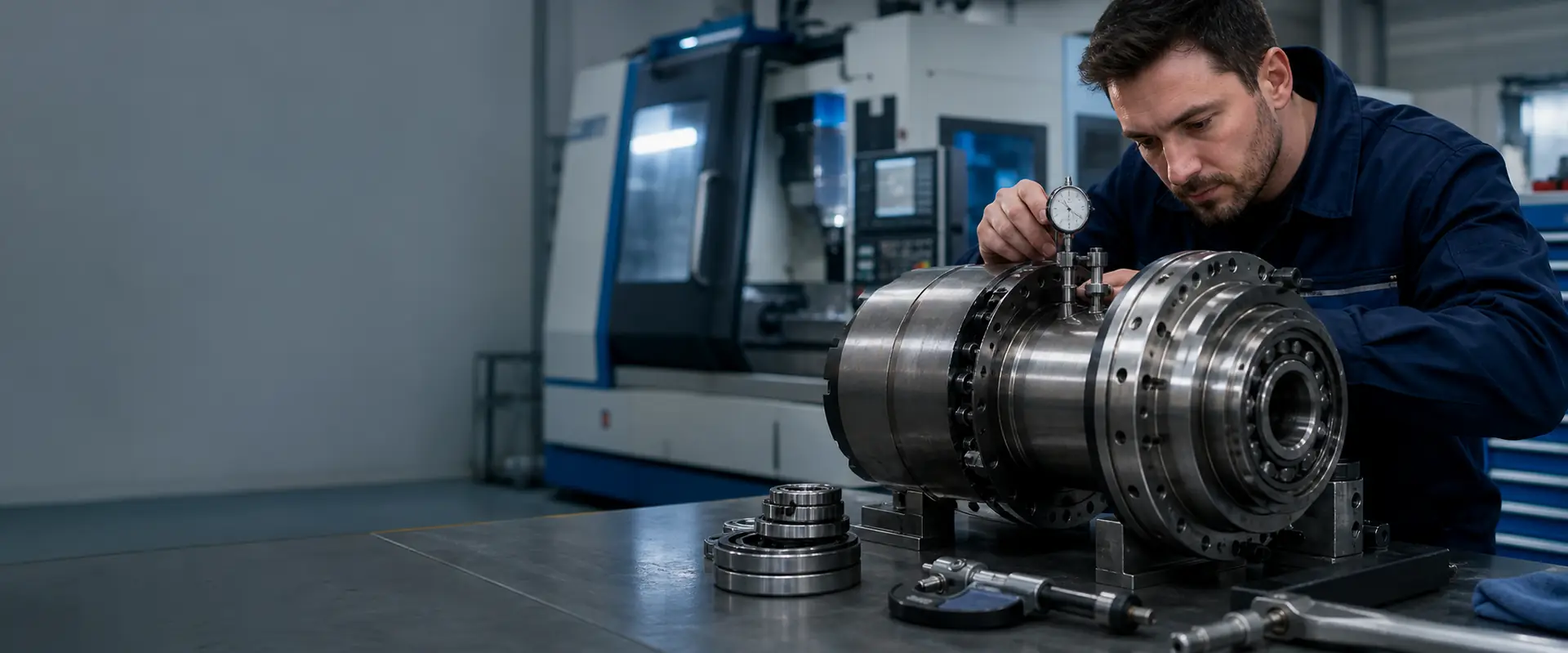
Machine brand
Toyoda Spindle Repair and Rebuild
We repair and rebuild spindles from Toyoda grinding machines and horizontal machining centres at our own independent workshop in Sankt Augustin, Germany. Rolling-element grinding and milling spindles are routine work here. Plain-bearing units are looked at case by case, and we say which is which before anything is committed. Ship the spindle to us, or arrange removal and refitting on site in advance.
Scope
Toyoda spindle systems we work on
Toyoda's history is in grinding as much as in milling, and that changes the repair. A grinding wheel spindle from a cylindrical or camshaft grinder may run on precision rolling bearings, on a hydrodynamic oil film, or on a hydrostatic system with an external supply. The three are not interchangeable jobs. The first thing we establish is which type is in front of us, because it decides whether we can sensibly take the work on at all.
Grinding wheel spindles on rolling bearings
The most common grinding spindle we see. Angular contact sets in a ground housing, running at high speed with a wheel on one end. These are stripped, the seats measured, bearings renewed, and the assembly balanced with the wheel adapter fitted where the customer supplies it.
Hydrodynamic plain-bearing spindles
Older grinder spindles ride on an oil film in a plain bush rather than on bearings. There is nothing to swap out: the job is measuring clearance, bore geometry and journal condition, then restoring the fit. We take these on when the bush and journal are still within reworkable limits.
Hydrostatic spindles
These depend on an external pressure supply, restrictors and pocket geometry as much as on the spindle itself. We assess them case by case and will decline the job if the unit needs the original supply system to set up properly. Saying no early is cheaper for you than saying it late.
Machining centre motor spindles
From the horizontal machining centres, usually a BT or CAT 50 taper with an integral motor and through-tool coolant. Winding, bearing and cooling faults all look like heat from outside, so the unit is stripped completely, measured, and reassembled with preload set for that spindle type.
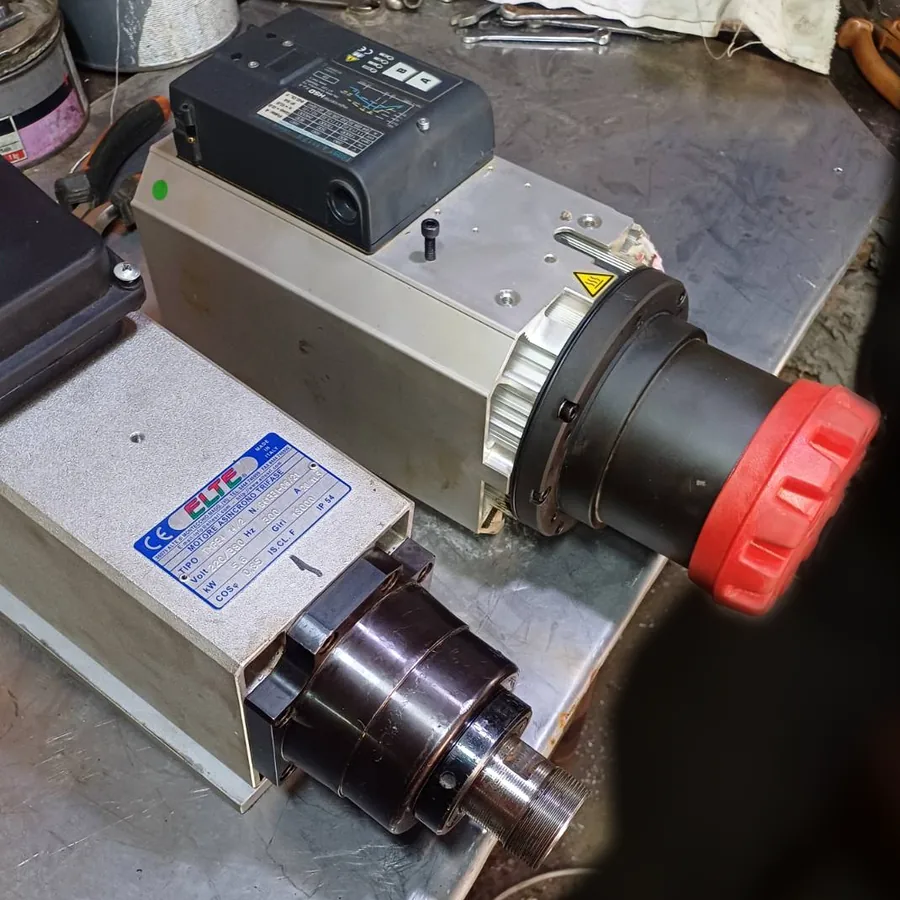
The exact configuration depends on the machine model and the year of manufacture. Two machines with the same model designation can carry different spindle units, so we confirm the build from your nameplate photograph before quoting.
Symptoms
Faults we see most often on Toyoda spindles
Noise and rising vibration
On a grinding spindle this often reaches the part as chatter marks before it is audible. We check bearing condition, journal geometry and balance, and rebalance to a stated ISO 21940 grade.
Overheating and thermal drift
On plain-bearing units heat usually means oil supply, viscosity or clearance. On rolling-element spindles it points at preload or lubrication. The two are diagnosed differently, so we establish the type first.
Runout at the taper
On the machining centre spindles, taper damage from crashes or heavy tool changes. On grinding spindles the equivalent is the wheel mount seat. Both are reground if there is material left.
Tool clamping problems
Weak drawbar force on the 50-taper machining centre spindles, usually settled disc springs or worn collet segments. Clamping force is measured before and after, and the figures go in the report.
Encoder and orientation faults
Orientation drift or an encoder that loses its reference. We deal with the mechanical mounting, coupling and cabling at the spindle; a drive or control fault is reported as that, not replaced blindly.
Coolant or grease ingress
Grinding coolant carries abrasive swarf, so a failed seal does more damage here than on a milling spindle. We report the state of the seal path and the shaft it runs on.
Process
What a repair looks like
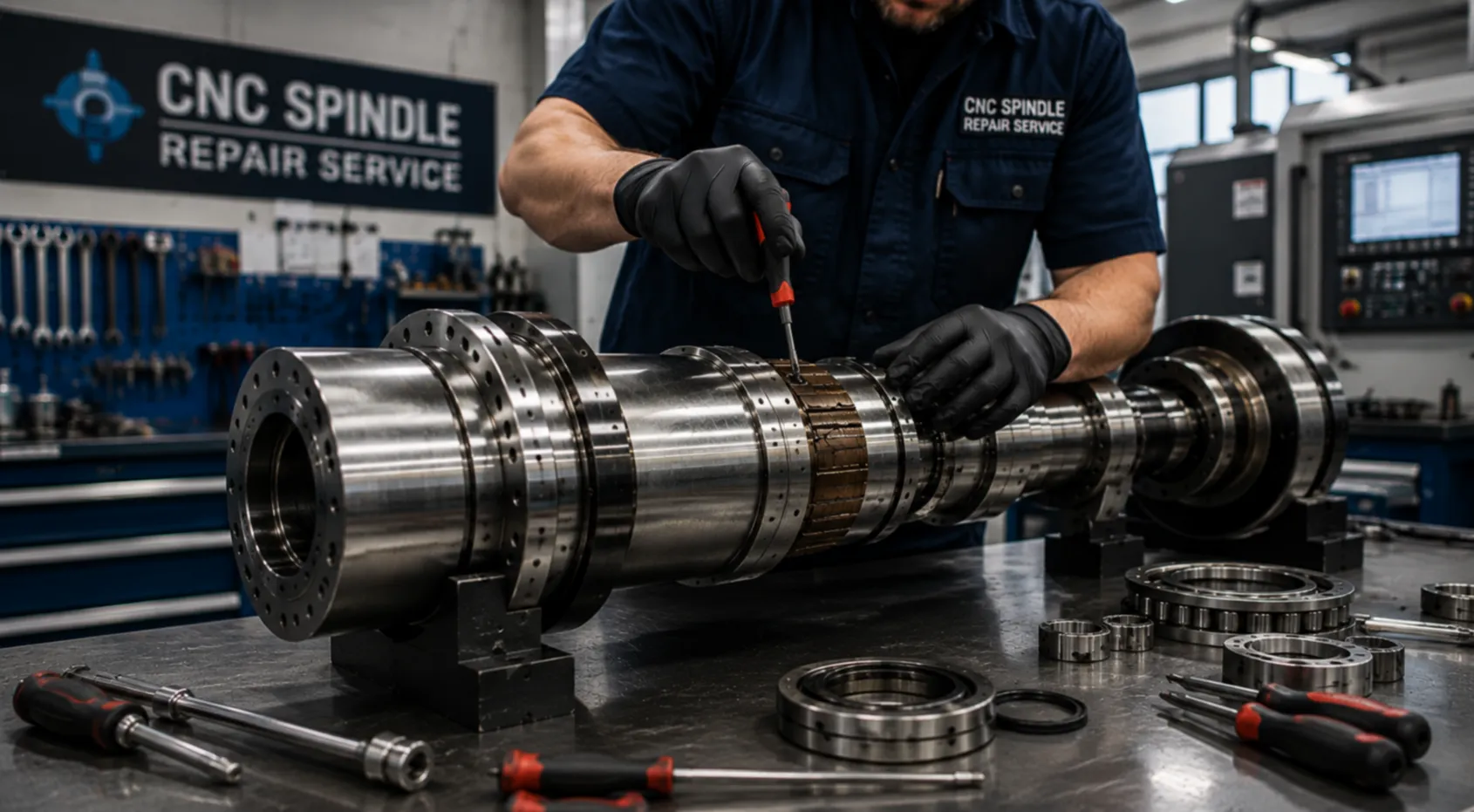
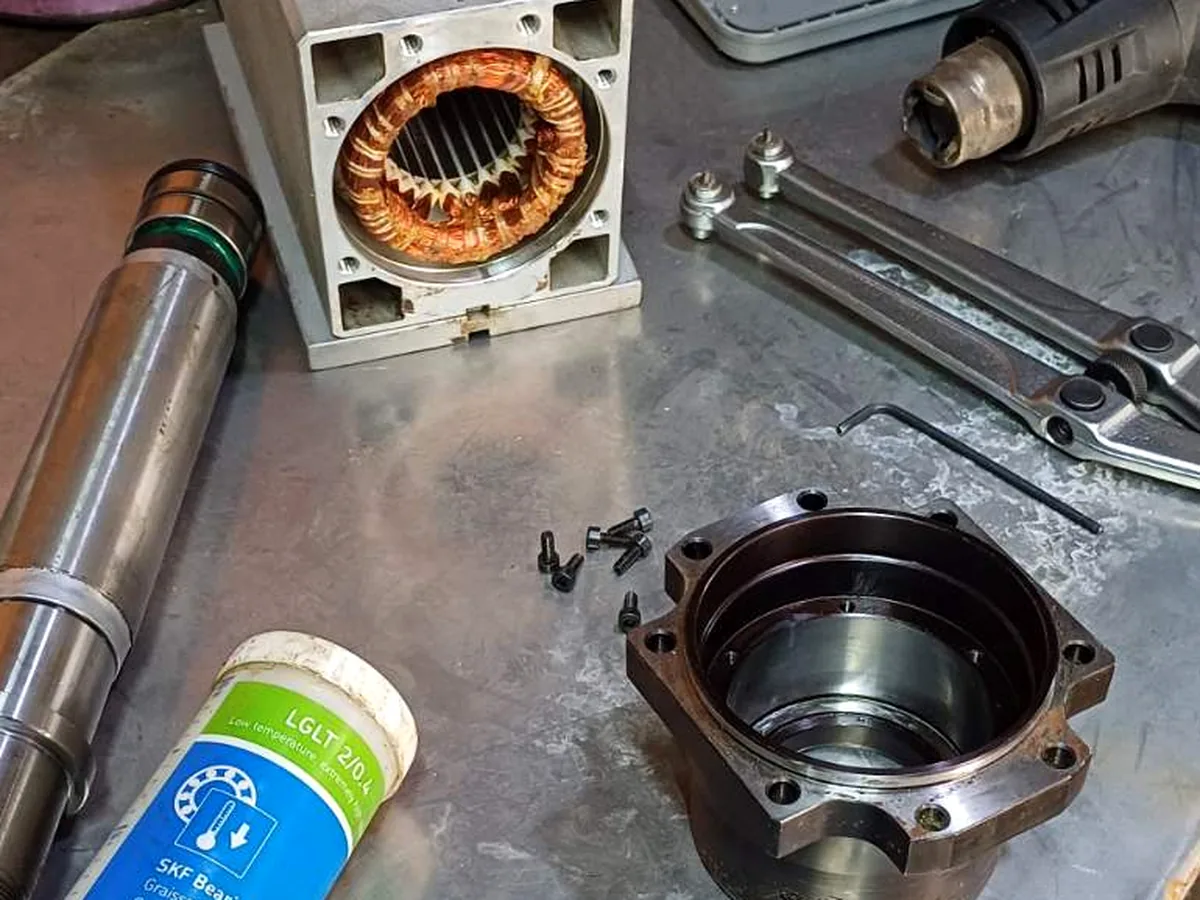
The spindle is logged in and inspected on arrival, then dismantled completely. We measure shaft and housing geometry, check the bearing seats, inspect windings and encoder, and photograph what we find. You receive a written quotation with the scope of work before anything is repaired. After the work is done the unit is dynamically balanced, run-in tested and shipped with a test report containing the measured values.
The individual operations — bearing replacement, rotor and stator rewinding, taper regrinding, drawbar and clamping repair, encoder work, seal and cooling circuit overhaul — are described on the services section of our homepage. On a Toyoda spindle they are usually combined into one rebuild rather than ordered separately.
What to send with your enquiry
- Photographs of the spindle nameplate and of the tool interface
- Machine model, spindle type and year of manufacture
- A short description of the symptoms and when they appear
- Any measurements you already have — runout, temperature, vibration, current draw
- Whether the machine is still assembled or the spindle is already removed
Removal should be carried out by qualified personnel following the machine documentation. If that is not possible on site, ask us about removal and refitting as part of an on-site visit.
Shipping and on-site service
Our experience with cross-border spindle projects allows us to prepare transport, inspection and any necessary on-site work in a structured way. Customers outside Germany send the spindle to us by freight forwarder; we inspect, repair, test and return it. On-site work — removal, installation, alignment and commissioning — is possible internationally, but only after the job has been agreed technically in advance, so that the right parts and instruments travel with the technician.
Questions
Toyoda spindle repair — frequently asked
Yes. We are an independent workshop, so the spindle can be sent to us directly by your maintenance team. No dealer is needed in the middle, and we are not restricted to one manufacturer's parts catalogue. What we cannot claim is any Toyoda or JTEKT authorisation. We hold none, and we would rather state that than leave it vague.
Units reaching us usually come from cylindrical and camshaft grinders such as the GL and GE families, and from the FH and FA horizontal machining centres. Some arrive still badged Toyoda Machine Works rather than JTEKT. That is a description of what turns up here, not a compatibility promise, so send us the spindle details.
Hydrodynamic plain-bearing spindles, in most cases yes: bore and journal are measured and the running clearance restored where the material allows. Hydrostatic units are assessed case by case. They are tied to their pressure supply and restrictor settings, and without that system on the bench we cannot verify the result honestly. We will tell you which category yours falls into before you ship.
Typically five to ten working days from arrival, depending on parts availability and what the teardown reveals. That is an estimate, not a committed date; a binding date is only valid if confirmed in writing. Grinding spindles with unusual wheel mounts or plain bearings can take longer, because the rework is machining rather than a parts change.
The unit is stripped, measured and reported on, and you get a written quotation for parts and labour before any repair starts. Nothing is ordered or machined until you accept it in writing. If the spindle turns out to be one we should not take on, we say so at that point and return it. Ask for the current inspection charge when you contact us.
Send us the spindle details
Tell us the machine model, the spindle type and what the machine is doing wrong. We come back with an initial assessment and a written quote before any work begins.
Scope
Spindle work we carry out for customers in Toyoda
Every operation below is done in our own workshop in Germany. Follow a link for what it involves and what we need from you.
Machine brand
Machine brands
We are independent and not tied to any builder. These are the makes whose spindles come across the bench most often.