 English
 Deutsch
 Français
 Español
 Nederlands
 Polski
 Italiano
 Română
 Türkçe
 Português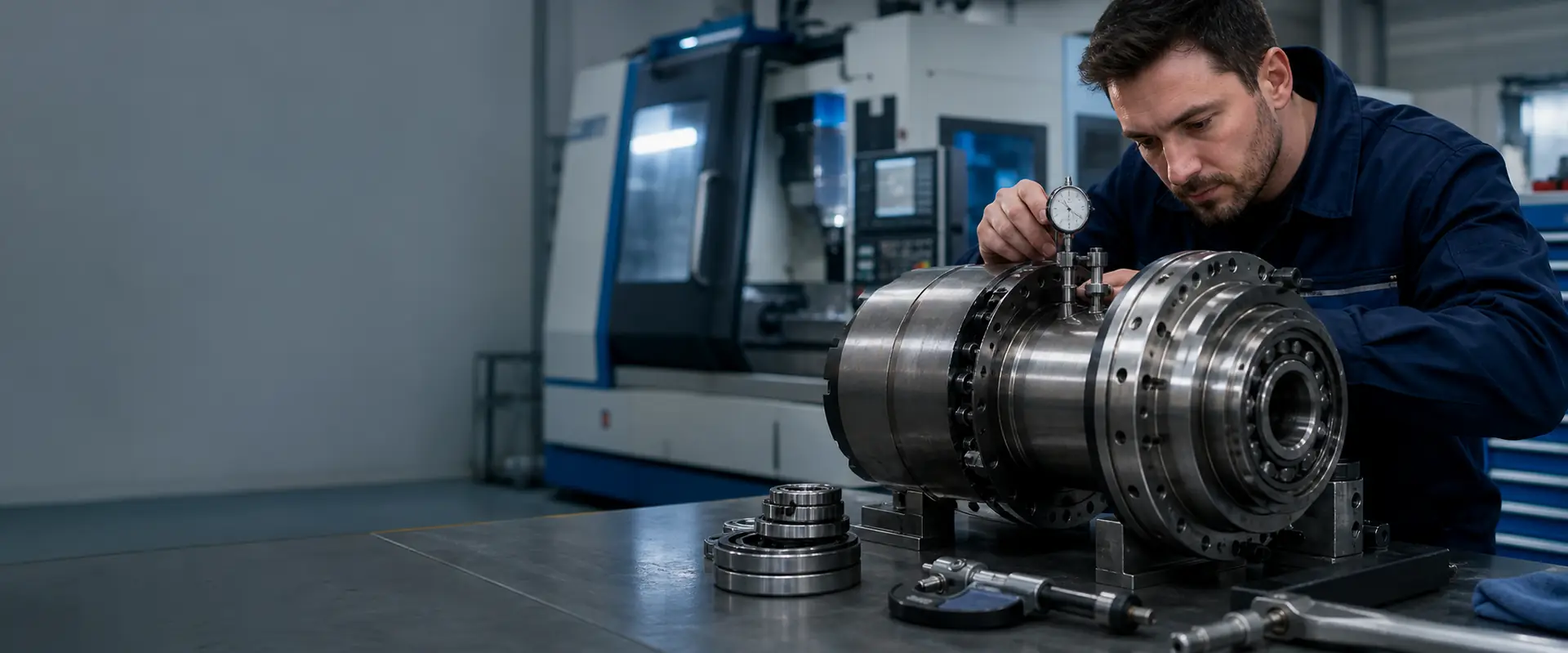
Machine brand
Brother Speedio Spindle Repair and Rebuild
We repair and rebuild spindles from Brother tapping and machining centres at our workshop in Sankt Augustin, Germany. These are small, high-speed units, and they are stripped, measured and reassembled here rather than swapped blind. Ship the spindle to us directly, or ask about on-site work by prior technical arrangement. We are an independent workshop, not a Brother dealer.
Scope
Brother spindle systems we work on
A Brother spindle is not a scaled-down machining centre head. Speedio units are light, run to high speed, and are built to accelerate and stop thousands of times in a shift with a tool change in between. The damage we find usually comes from that duty cycle rather than from heavy cutting: fatigued bearings, a worn clamping stack, and a taper marked by tool changes at speed.
BT30 built-in motor spindles
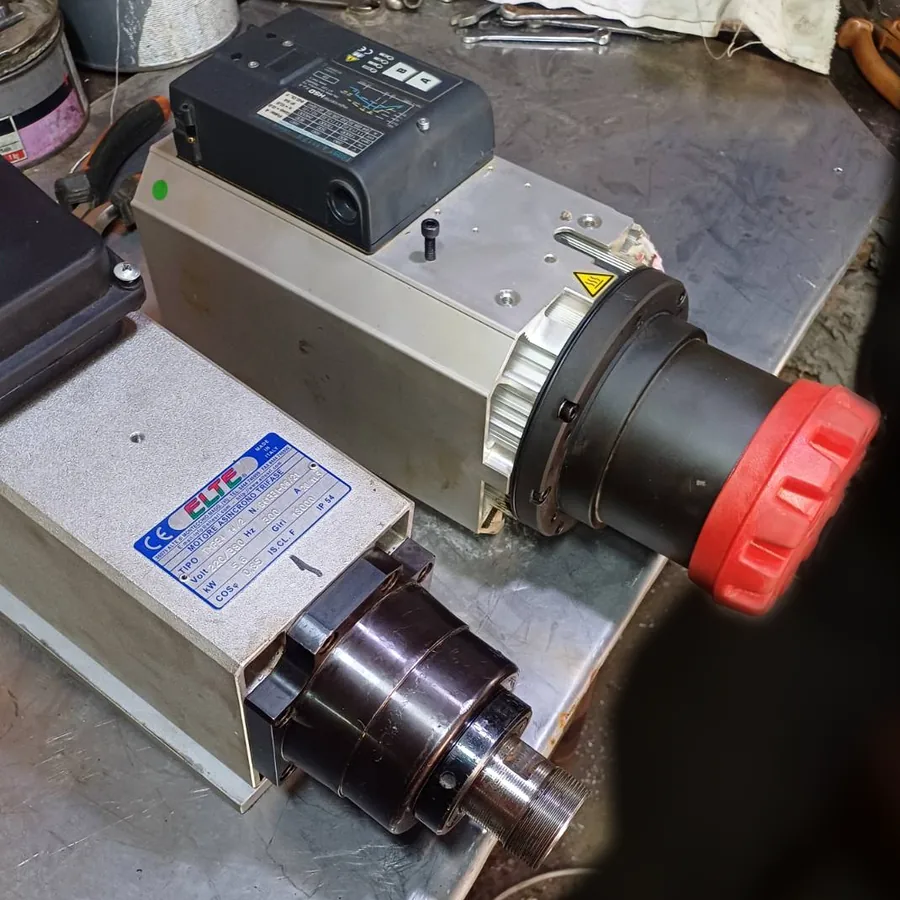
The common Speedio arrangement: a compact rotor on the shaft, no belt, and very little mass to slow down. Small bearings run at high speed, so contamination and preload errors show up quickly. The unit is stripped completely, the stator tested, and the bearing set replaced as a matched group.
High-speed HSK-E32 and HSK-E40 spindles
Fitted where fine tooling and higher speed matter. The hollow taper clamps on the inside face, so wear in the collet segments changes seating long before anything is audible. Clamping force and taper contact are both measured, and the bearings are set for the speed the unit actually runs at.
Synchronised tapping spindles
Tapping centres reverse the spindle constantly, and every reversal loads the bearings and the encoder coupling in the opposite direction. We check the encoder mounting and shaft end as a matter of course on these units, because a fault there reads on the control as a following error.
Through-spindle coolant spindles
Where coolant runs through the shaft, a rotary union sits at the rear and its seal is a wear part. A leaking union pushes coolant towards the rear bearing, which is the harder end to inspect in the machine. Union, seals and the internal coolant path are all checked during rebuild.
The exact configuration depends on the machine model and the year of manufacture. Two machines with the same model designation can carry different spindle units, so we confirm the build from your nameplate photograph before quoting.
Symptoms
Faults we see most often on Brother spindles
Noise and rising vibration
On a light high-speed spindle, noise usually arrives late. Finish marks and a rising current draw at speed come first. We measure runout and bearing condition on the bench before deciding what to replace.
Overheating and thermal drift
Small bearings hold little grease, so heat builds fast once preload rises or lubricant degrades. Short warm-up times can mask it. The bearing seats, grease condition and any air or coolant cooling path are all examined.
Runout at the taper
Fast tool changes mark a BT30 or HSK taper sooner than heavy cutting does. The taper is reground and runout corrected. If the shaft itself is bent, we report that before further work.
Tool clamping problems
These machines change tools constantly, so the disc spring stack and gripper wear by cycle count rather than by cutting hours. Clamping force is measured and the drawbar stroke checked against the unclamp mechanism.
Encoder and orientation faults
Synchronised tapping and the tool change both depend on exact spindle position. A cracked encoder coupling or a contaminated disc shows as an orientation alarm; the sensor and its mounting are tested mechanically first.
Coolant or grease ingress
Compact spindles have little room for sealing, and high-pressure coolant finds the front labyrinth. Washed-out grease, then rust on the raceways, is the usual sequence. Seals, slinger and air purge are restored during reassembly.
Process
What a repair looks like
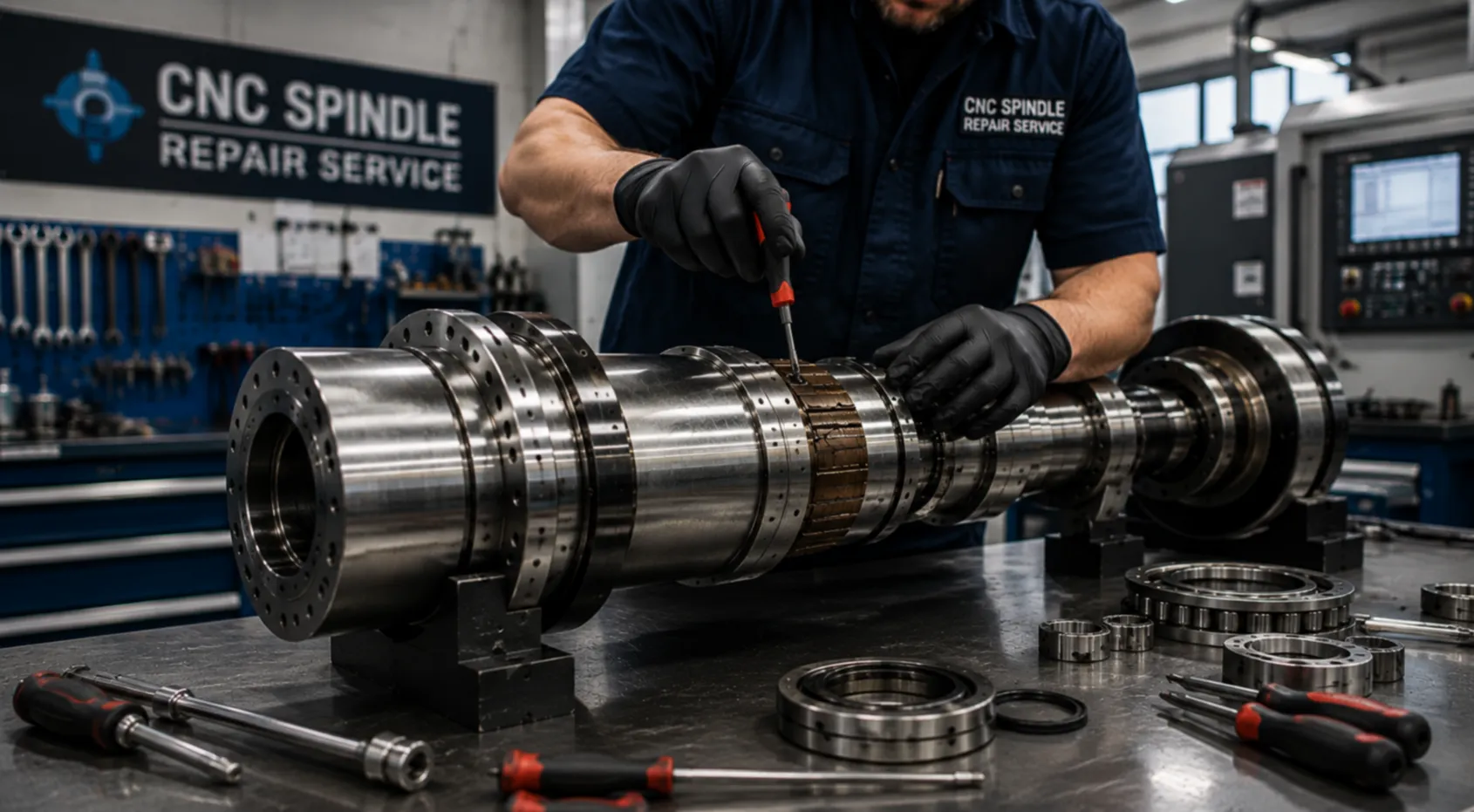
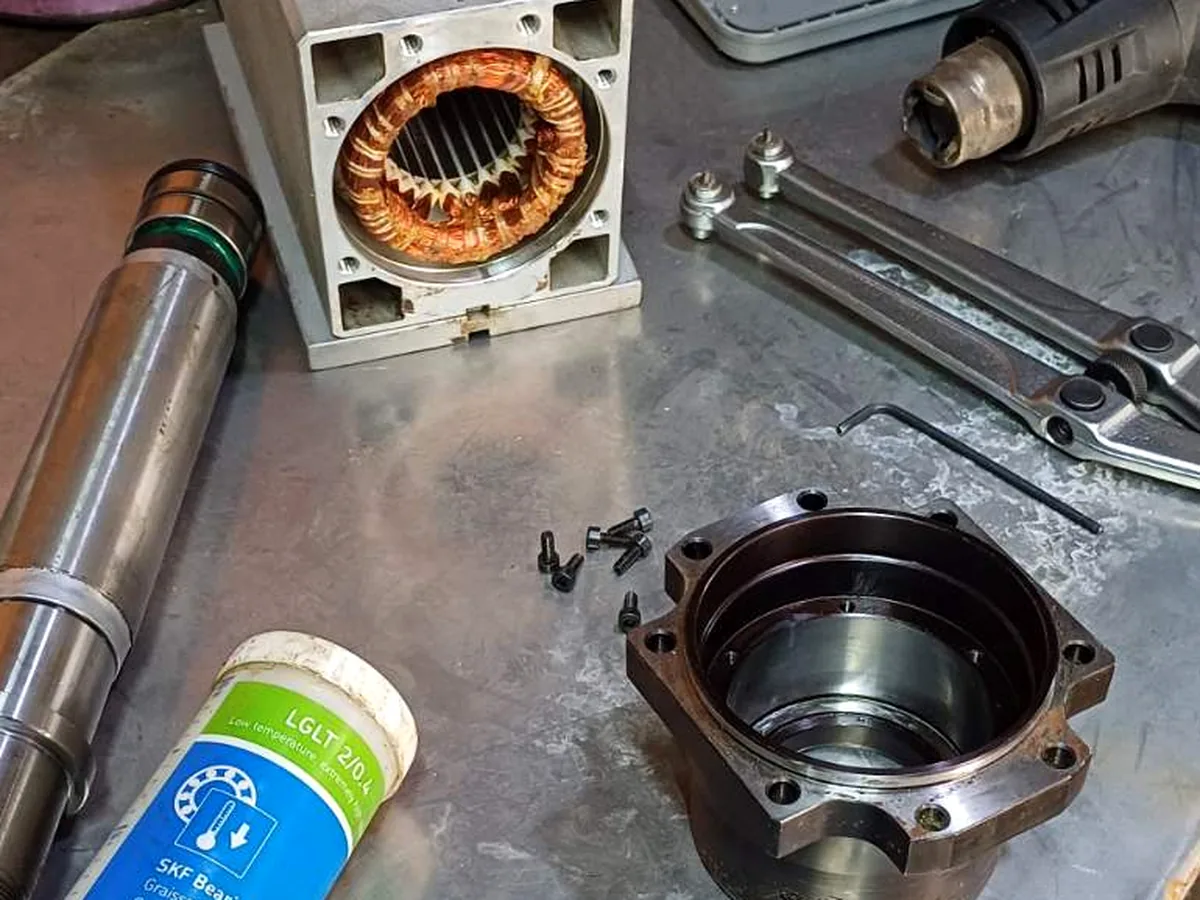
The spindle is logged in and inspected on arrival, then dismantled completely. We measure shaft and housing geometry, check the bearing seats, inspect windings and encoder, and photograph what we find. You receive a written quotation with the scope of work before anything is repaired. After the work is done the unit is dynamically balanced, run-in tested and shipped with a test report containing the measured values.
The individual operations — bearing replacement, rotor and stator rewinding, taper regrinding, drawbar and clamping repair, encoder work, seal and cooling circuit overhaul — are described on the services section of our homepage. On a Brother spindle they are usually combined into one rebuild rather than ordered separately.
What to send with your enquiry
- Photographs of the spindle nameplate and of the tool interface
- Machine model, spindle type and year of manufacture
- A short description of the symptoms and when they appear
- Any measurements you already have — runout, temperature, vibration, current draw
- Whether the machine is still assembled or the spindle is already removed
Removal should be carried out by qualified personnel following the machine documentation. If that is not possible on site, ask us about removal and refitting as part of an on-site visit.
Shipping and on-site service
Our experience with cross-border spindle projects allows us to prepare transport, inspection and any necessary on-site work in a structured way. Customers outside Germany send the spindle to us by freight forwarder; we inspect, repair, test and return it. On-site work — removal, installation, alignment and commissioning — is possible internationally, but only after the job has been agreed technically in advance, so that the right parts and instruments travel with the technician.
Questions
Brother spindle repair — frequently asked
Yes. We are an independent workshop, so the spindle can come to us straight from the machine owner or a service contractor. There is no dealer step and no single parts catalogue we are bound to. What we cannot offer is Brother authorisation of any kind. We hold none, and we would rather state that than imply otherwise.
Units reaching us usually come from Speedio machines, the S, R and M series among them, and from older TC tapping centres. Most are BT30, some HSK-E32 or HSK-E40. That is a description of what arrives in the workshop, not a compatibility list; what a given spindle needs is decided once it is apart.
Yes, and on these units it matters more than on a slow heavy head. The rotating assembly is light, so a small residual imbalance produces a large force at full speed. We balance the assembly to a grade appropriate for the running speed, following ISO 21940, and record the figure achieved.
Typically 5 to 10 working days from arrival, depending on parts availability and what the teardown reveals. That is an estimate, not a committed date; a binding date is only valid if confirmed in writing. High-speed bearings in the sizes these units use are not always on the shelf, which is the usual reason for the longer end.
The spindle is dismantled, measured and assessed, and you get a written quotation before repair work starts. That assessment is chargeable, at a price agreed beforehand, so the invoice holds no surprises. On small units the assessment often shows the damage is limited to bearings and seals, which keeps the quotation short.
Send us the spindle details
Tell us the machine model, the spindle type and what the machine is doing wrong. We come back with an initial assessment and a written quote before any work begins.
Scope
Spindle work we carry out for customers in Brother
Every operation below is done in our own workshop in Germany. Follow a link for what it involves and what we need from you.
Machine brand
Machine brands
We are independent and not tied to any builder. These are the makes whose spindles come across the bench most often.