 English
 Deutsch
 Français
 Español
 Nederlands
 Polski
 Italiano
 Română
 Türkçe
 Português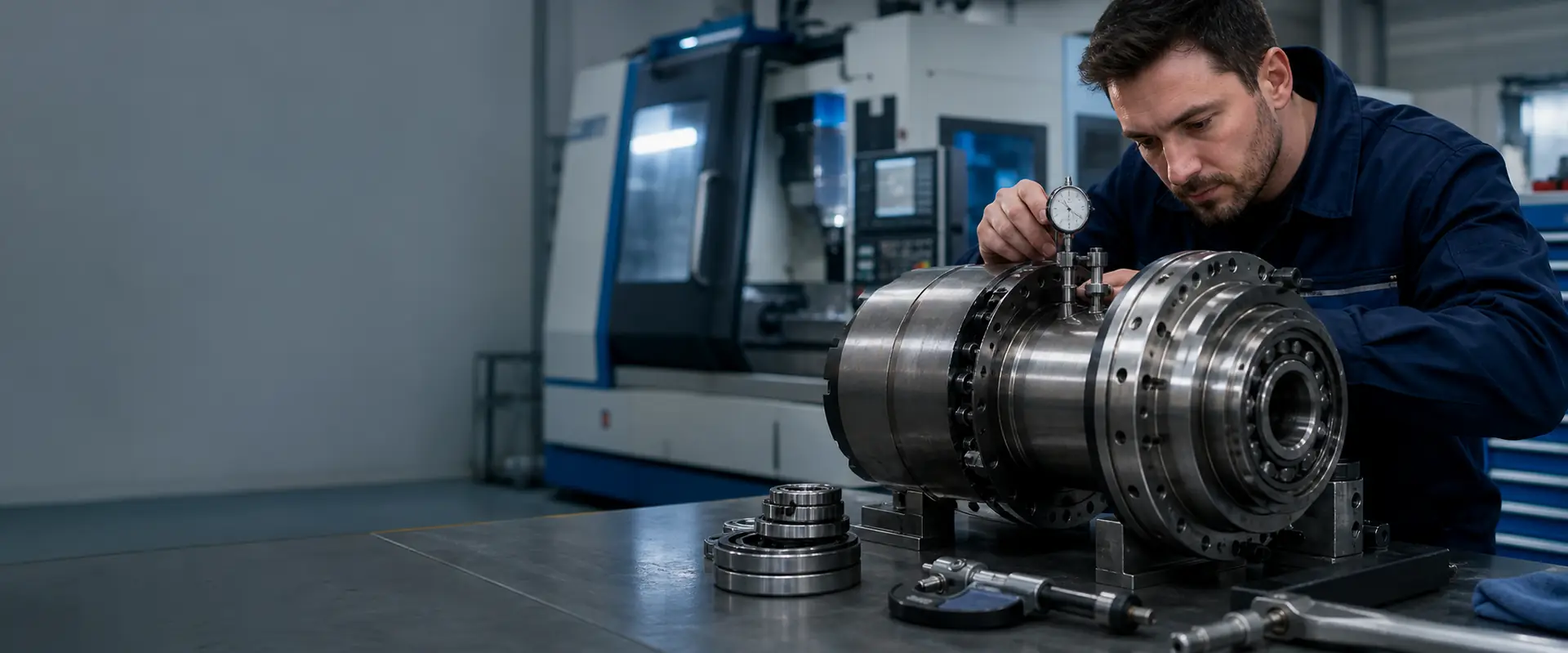
Electrical work
Spindle motor rewinding
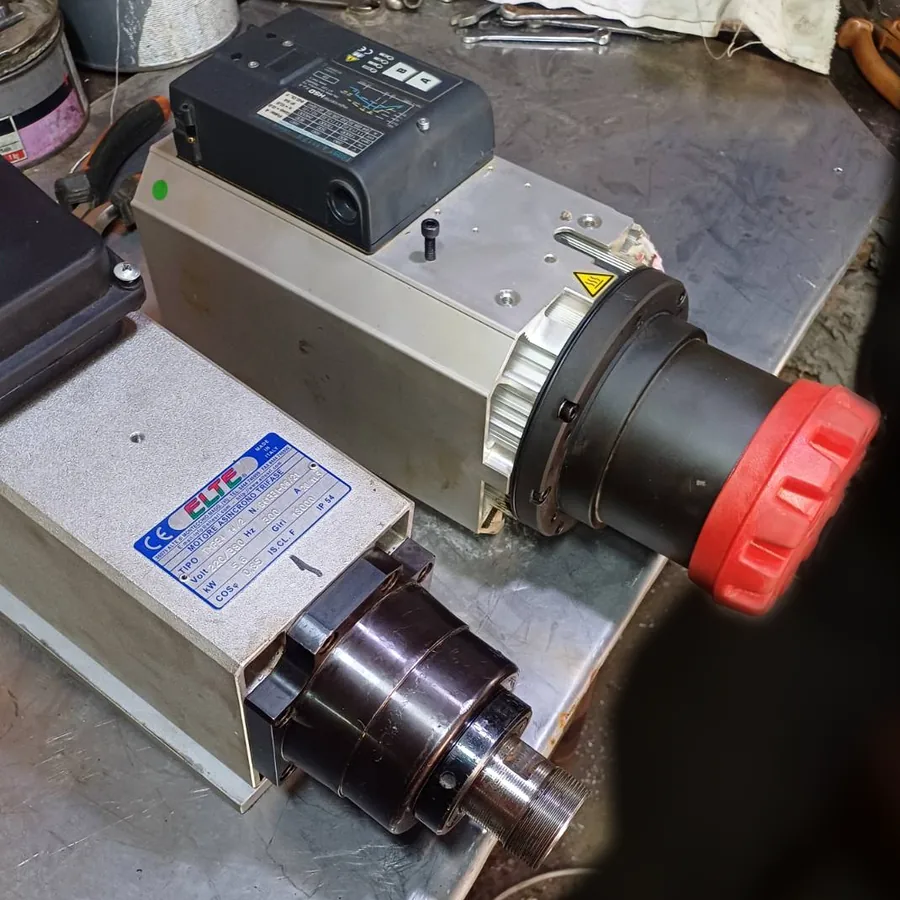
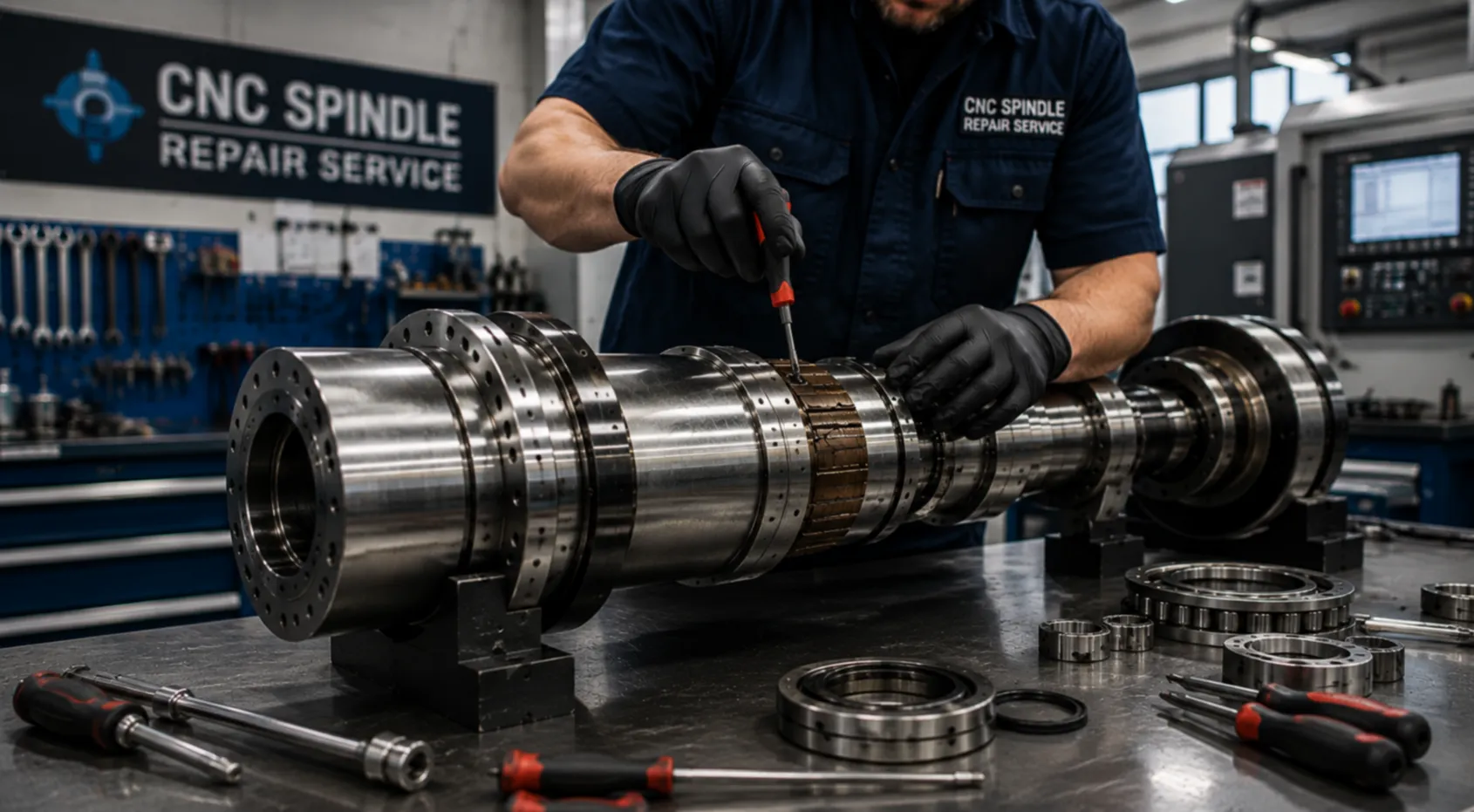
An integral motor spindle carries its stator in the housing and its rotor on the shaft. When the winding fails the machine stops, but the winding is rarely the whole fault. Rewinding restores the electrical side; establishing what destroyed it is the other half of the job.
When it is needed
What a failing winding looks like
Winding faults often look like drive problems at first: the drive trips, reports an earth fault or limits power. Some of them start mechanically, with coolant or bearing debris reaching the stator, which is why the cause is checked before anything is rewound. These are the symptoms that usually lead to an electrical inspection of the motor spindle.
Earth fault or drive trip
The drive trips on earth fault or overcurrent, sometimes only once the spindle is warm. A low insulation resistance reading between winding and frame usually confirms it.
Coolant where it should not be
Emulsion in the motor cavity, or a rotary union that has been weeping, attacks the winding insulation quietly for weeks before the spindle actually fails.
Overheating without mechanical noise
The spindle runs hot and derates but still sounds normal. Blocked cooling jackets, unbalanced phase resistances and repeated overload all tend to show up this way.
Scope
What rewinding a motor spindle covers
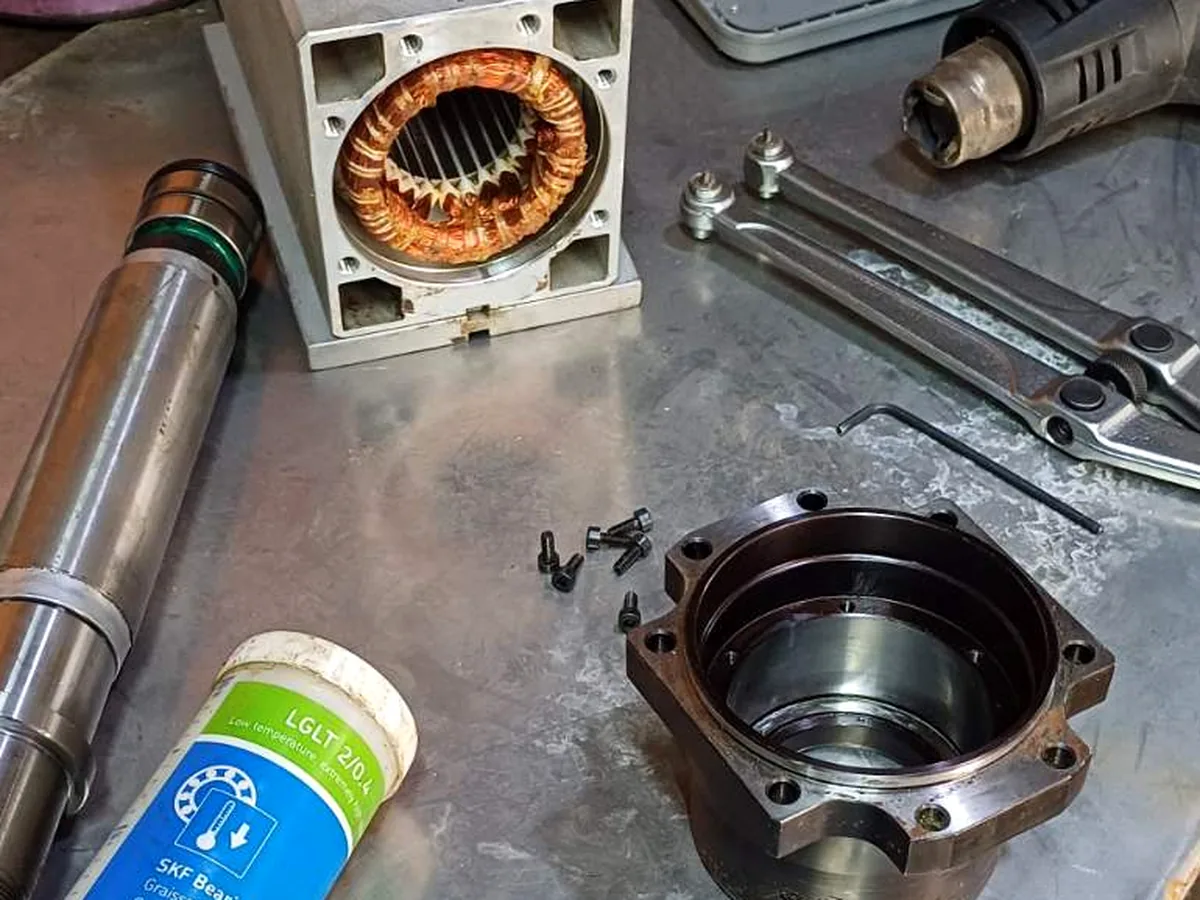
A burnt stator is a symptom. Before a coil is wound we try to establish why the insulation gave way, because a spindle rewound into an unchanged machine fault simply comes back. The winding is then rebuilt to the data taken from the original, impregnated and tested electrically before it goes anywhere near the mechanical rebuild.
Electrical testing before and after
Insulation resistance to frame, winding resistance balance between phases and surge comparison testing are recorded on arrival and repeated on the finished stator. Turn-to-turn faults show up on surge testing when a resistance check still looks normal.
Establishing the cause of failure
Coolant ingress, a blocked cooling jacket, sustained overload and drive faults each leave different marks on a winding. The burn pattern, whether single phase or general, tells us where to look before the stator is stripped.
Rewinding to the original data
The old winding is recorded as it comes out: turns per coil, wire gauge, pitch, connection and slot arrangement. The new winding follows that data, with insulation materials of at least the original thermal class.
Impregnation and rotor work
The finished stator is impregnated and cured so the coils are supported against vibration and sealed against moisture. Rotors are checked for damaged laminations, fit on the shaft and, where fitted, magnet or cage condition.
Questions
Motor rewinding spindle repair — frequently asked
Usually yes. The data is taken from the old winding as it is stripped: turns per coil, wire gauge, pitch, connection and slot fill. Where a winding is too badly burnt to read reliably, we say so, because guessing at the data would change how the motor behaves.
Not blindly. A drive or feedback fault can destroy a winding, and fitting a rewound spindle into an unchanged fault destroys it again. We report what the failure pattern indicates and what should be checked on the machine before the spindle is refitted and run.
It is a repaired motor and we do not claim otherwise. Rewound to the recorded data, insulated to at least the original thermal class and properly impregnated, it typically performs as it did before. The measured values from the test run are in your report.
The encoder is inspected as part of the teardown and its condition reported. Whether it is cleaned, re-aligned or replaced depends on what the inspection shows and on availability of the part, and either way it is covered in the written quotation.
Process
How the electrical repair proceeds
-
1
Incoming electrical measurement
Insulation resistance, phase resistances and, where the winding still permits it, surge comparison are measured on arrival and written down in the file before anything is dismantled.
-
2
Strip and record the winding
The stator is stripped and the winding data recorded coil by coil. The core is cleaned and its lamination insulation checked before any new coils go in.
-
3
Wind, insulate, impregnate
New coils are wound and inserted, connections made and insulated, then the assembly is impregnated and cured. The electrical tests are repeated on the finished stator.
-
4
Rebuild and run in
The stator goes back into the housing, the spindle is reassembled and run in under measurement, so that temperature rise and current draw can be checked against expectation.
Checklist
Details we need for the electrical side
Winding data, voltage and the drive type tell us how the motor was designed to run and what the insulation has to withstand. Fault codes and any coolant seen at the spindle help us establish whether the winding failed on its own or as a result of another problem that has to be fixed at the same time.
- Spindle and motor type plate data, including voltage
- Drive make and model, and any fault codes logged
- Whether coolant leakage has been seen at the spindle
- Cooling type: jacket, air or none
Have the winding tested
Send the spindle and motor type plate data, the drive details and any fault codes the machine logged. We will confirm what the electrical inspection covers and where to ship the unit.
Scope
Spindle work we carry out for customers in Motor rewinding
Every operation below is done in our own workshop in Germany. Follow a link for what it involves and what we need from you.
Machine brand
Machine brands
We are independent and not tied to any builder. These are the makes whose spindles come across the bench most often.