 English
 Deutsch
 Français
 Español
 Nederlands
 Polski
 Italiano
 Română
 Türkçe
 Português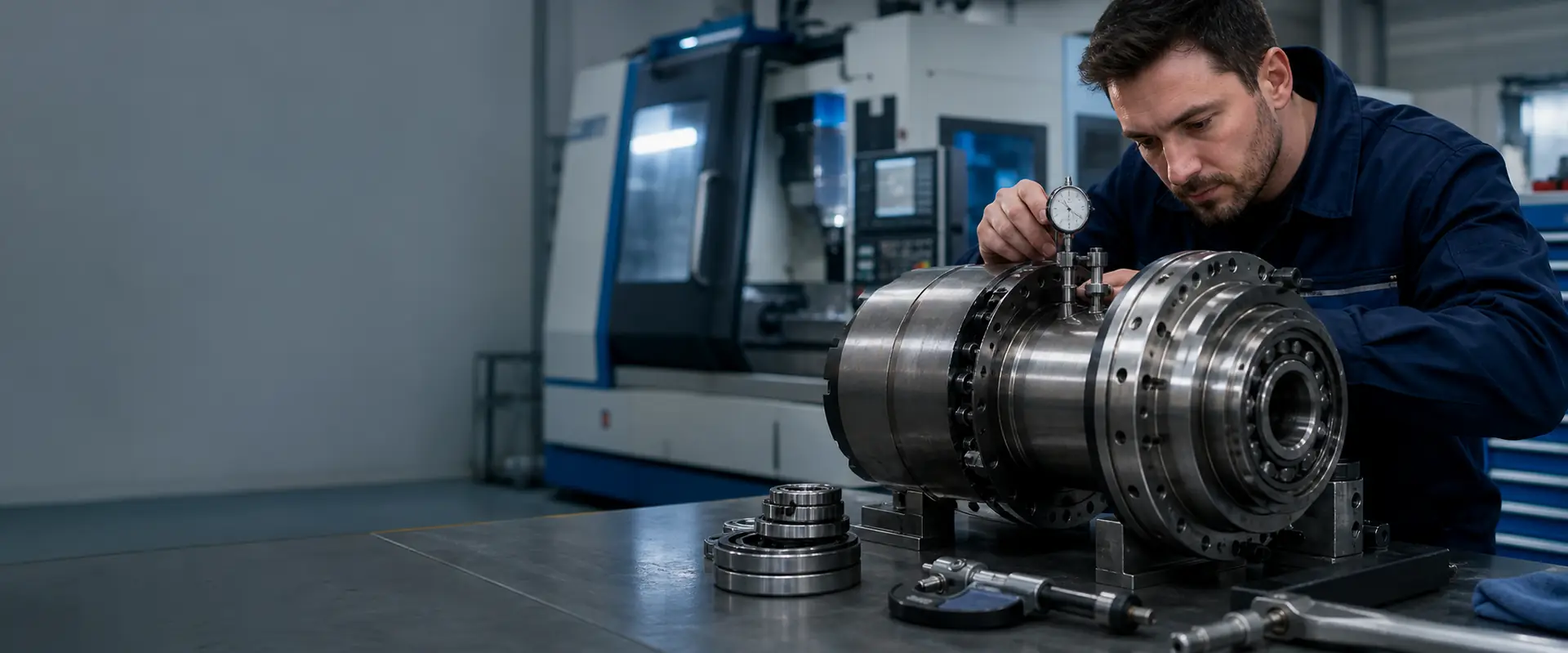
Machine brand
Homag Spindle Repair and Rebuild
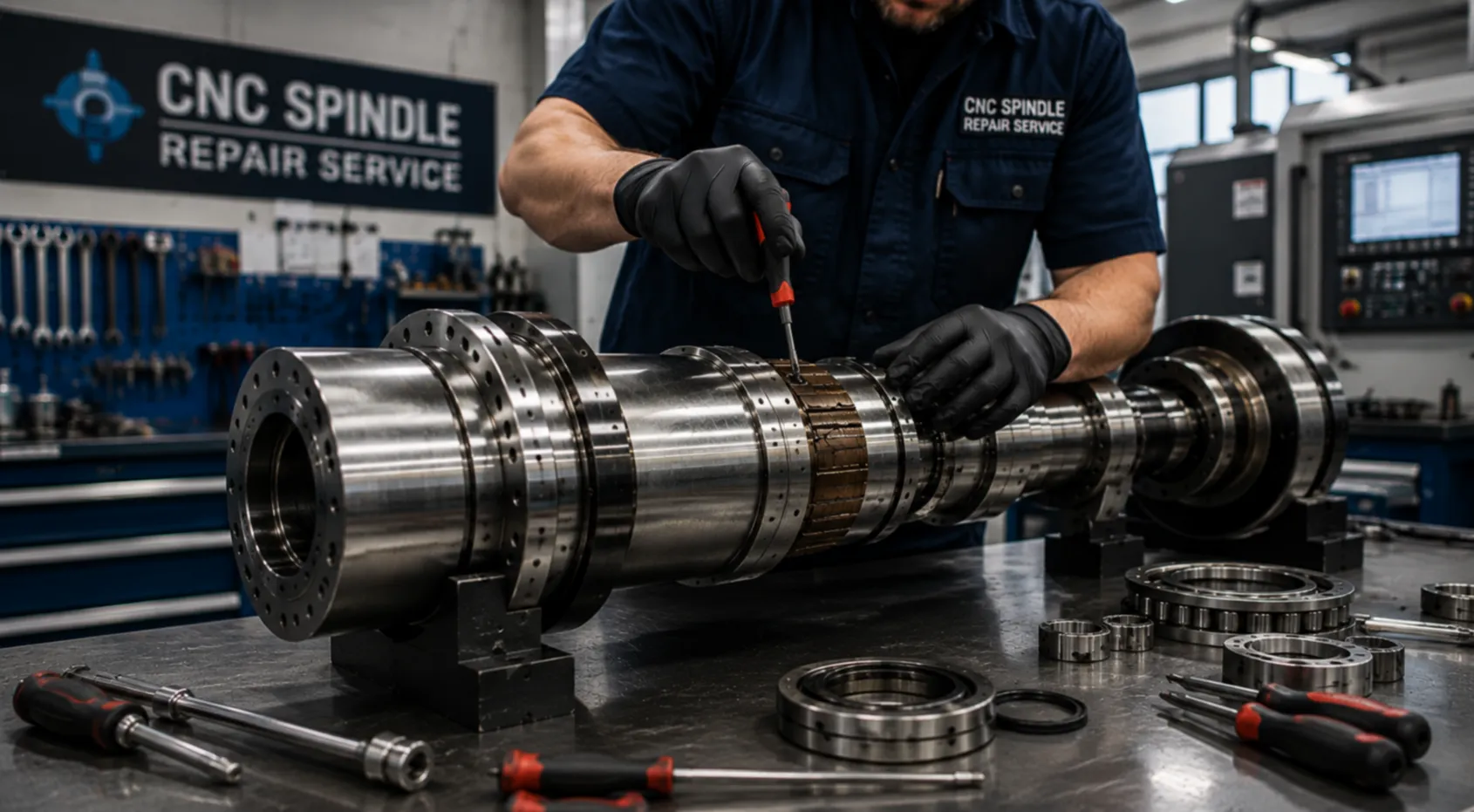
Homag machining centres and CNC routers cut wood, panels and composites at high speed, and the spindle takes the dust, the resin and the tool changes. We rebuild these spindles — in most cases HSD electrospindles carrying a Homag part number — in our own workshop in Sankt Augustin, Germany. We are independent and not authorised by or connected to Homag or HSD.
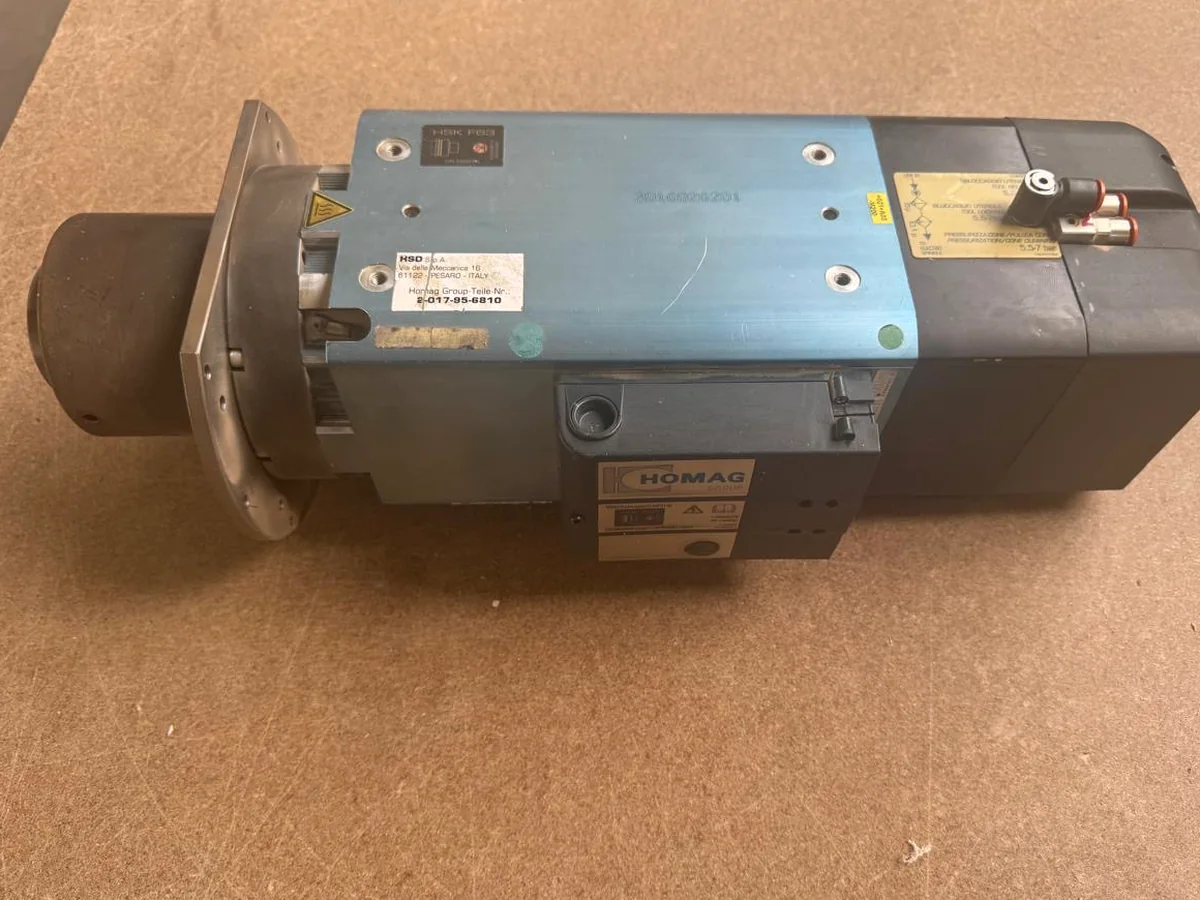
On the bench
A Homag spindle is usually an HSD electrospindle
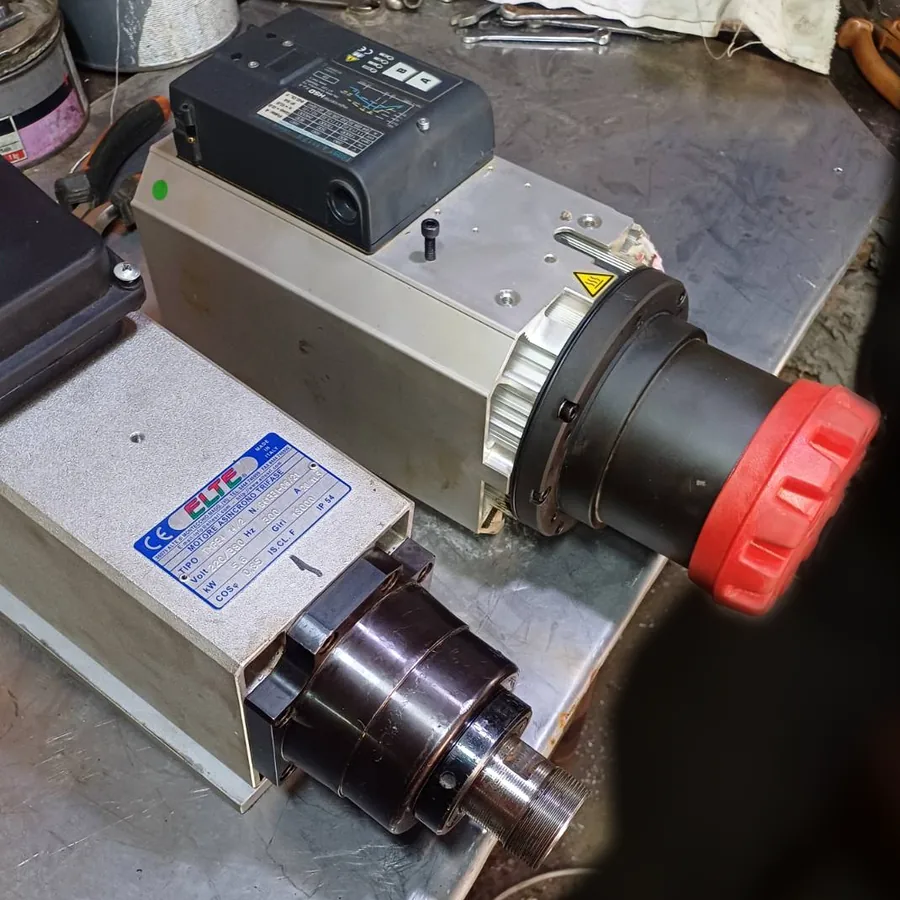
Many Homag CNC machines leave the factory with an electrospindle built by HSD S.p.A. in Pesaro, Italy. The unit in the photo is a typical example: the HSD maker plate sits on the housing, a second label carries the Homag Group part number, and the tool interface is HSK F63.
For a repair, those labels matter more than the machine name. The HSD type and serial number tell us the bearing arrangement, the cooling method and the speed range; the Homag number tells us how the unit was configured for your machine. Please photograph both before you send anything.
- HSD maker plate: type, serial number, speed and power data
- Homag Group part number label (for example 2-017-…)
- Tool interface marking, usually HSK F63 on these machines
- Air connections for tool release, cone cleaning and sealing air
Scope
Homag spindle units we take on
Woodworking spindles run fast, change tools constantly and live in fine dust. That changes where they wear compared with a metal-cutting spindle, so we inspect the air system, the clamping and the sensors as carefully as the bearings.
HSK F63 electrospindles
The main spindle on most Homag machining centres and nesting routers. Air-cooled and liquid-cooled versions both come in. We replace the bearing set, check the stator and cooling, and restore the tool clamping as one job.
Spindles for 5-axis heads and aggregates
Units that drive angle heads and aggregates through a C-axis or an additional interface. Here the aggregate coupling and its locating faces are measured as well, because a worn interface shows up as chatter on the workpiece.
Drilling and saw spindles
Spindles from drilling blocks and grooving saws are smaller but numerous. Whether a rebuild makes sense depends on the unit; we look at it first and tell you if replacement is the more sensible route.
Older Weeke and Homag machines
Machines from the former Weeke range and older Homag series are still in daily production. Parts for older HSD types can take longer to source, so we confirm availability before any strip work is quoted.
Symptoms
Faults we see most often on Homag spindles
Woodworking spindles fail differently from metal-cutting ones: high speeds, frequent tool changes and fine dust put the air system, the clamping and the sensors under constant load. On Homag machines with HSD electrospindles, most faults start there and the bearings fail as a consequence. These are the faults we see most often.
Dust and resin inside the spindle
If the sealing air drops out or is wet, fine wood dust and resin are drawn in at the nose. The result is rough bearings and sticky clamping. We trace how it got in, not only what it damaged.
Tool will not release or clamp
The tool release on these spindles is pneumatic. A tired piston seal, weak disc springs or a worn HSK collet all end in the same alarm. We measure clamping force before and after the repair.
Bearing noise at high speed
These spindles often run at 18,000 rpm and above, mostly on hybrid ceramic bearings. Noise usually appears at the top of the speed range first; by the time it is audible at low speed, the bearings are well gone.
Overheating
On air-cooled units, clogged fins or a failed fan are a common cause; on liquid-cooled units, a blocked jacket. A winding problem can look the same, so the stator is tested on every job.
Sensor faults
Tool-clamped, tool-released and no-tool sensors, plus the temperature sensor, report to the control. A sensor that has shifted or failed stops the machine even when the mechanics are fine. We reset and test them on the bench.
Taper and runout problems
Frequent tool changes and the occasional crash mark the HSK contact faces. Runout at the tool then shows up as poor edge quality. The taper is reground where there is enough material to do it.
Process
How we rebuild a Homag spindle
- We identify the unit from the HSD plate and the Homag part number and agree the scope with you.
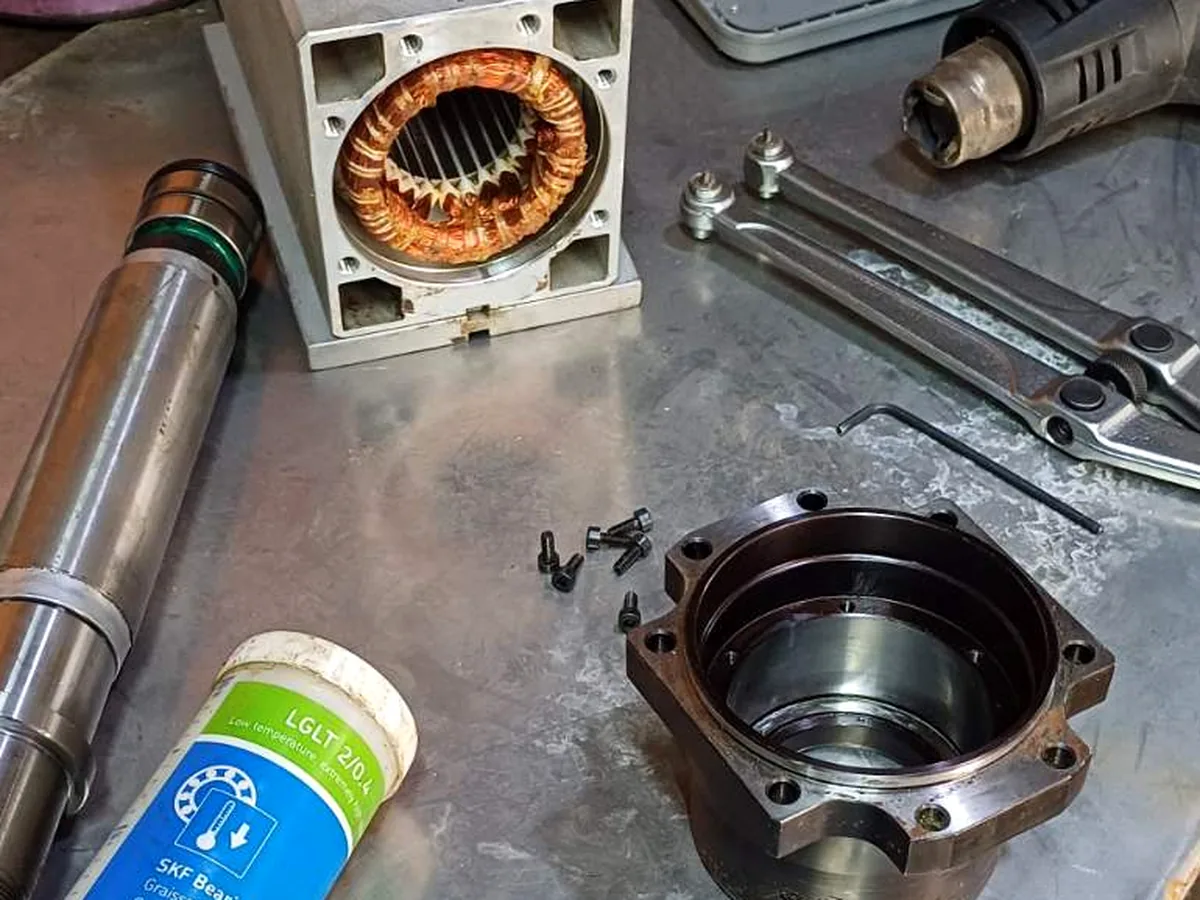
- The spindle is stripped completely, cleaned of dust and resin, and every part is measured: shaft, housing bores, taper, bearings, clamping set and stator.
- You receive a written quotation with photos and findings. Nothing is repaired or ordered before you accept it in writing.
- The rebuild covers bearings, seals and the clamping system as needed, followed by sensor adjustment and a check of all air passages.
- The spindle is dynamically balanced and run in through its speed range with temperature recorded, and the clamping force is measured.
- It goes back to you with a test report, ready to fit.
What to send with your enquiry
The HSD plate and the Homag part number label identify the unit; together with the machine series and the air pressures, they tell us which parts and which tests the spindle needs.
- Photos of the HSD plate and the Homag part number label
- Machine type and year, for example the machining centre series
- The symptoms, and whether they appear cold, warm or only at high speed
- Your sealing air and tool-release air pressure, if known
- Whether the spindle is already removed from the machine
A practical point: the yellow label on the spindle shown above specifies the air pressure for cone cleaning and sealing. Clean, dry air at that pressure is the cheapest protection a woodworking spindle can get.
Questions
Homag spindle repair — frequently asked
Yes. Your maintenance team can send the spindle to us directly. We are an independent workshop and do not use Homag or HSD service channels. We cannot claim any authorisation from either company, and we say so plainly.
Yes. Many Homag machines carry HSD electrospindles with a Homag Group part number. For the repair we need both: the HSD type and serial number, and the Homag part number. A photo of each label is enough to start.
Speed and dust. They run faster, change tools more often and work in fine, abrasive dust and resin. Most failures we see start in the air system or the clamping, and the bearings fail as a consequence.
Typically five to ten working days from arrival, depending on parts and on what the teardown reveals. That is an estimate, not a committed date; a binding date is only valid if confirmed in writing.
Spindle units, yes. Drilling gearboxes and aggregates we assess case by case after seeing photos, because for some of them an exchange unit is the better choice. We will tell you before you ship anything.
Send us the spindle details
Tell us the machine model, the spindle type and what the machine is doing wrong. We come back with an initial assessment and a written quote before any work begins. For Homag machines, send photos of the HSD plate and the Homag label — both numbers are needed to identify the electrospindle.
Scope
Spindle work we carry out on Homag spindles
Every operation below is done in our own workshop in Germany. Follow a link for what it involves and what we need from you.
Machine brand
Machine brands
We are independent and not tied to any builder. These are the makes whose spindles come across the bench most often.