 English
 Deutsch
 Français
 Español
 Nederlands
 Polski
 Italiano
 Română
 Türkçe
 Português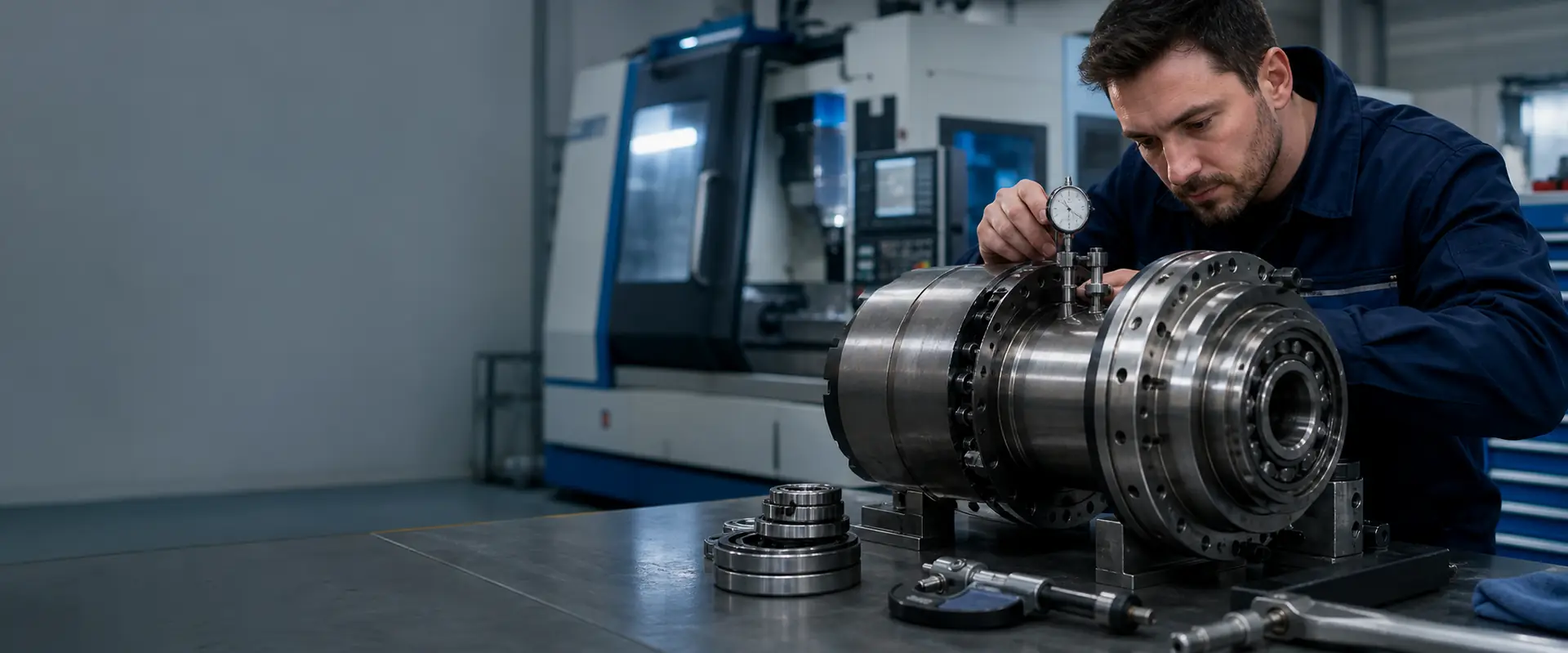
Operation
Spindle bearing replacement
Most spindles that come in need bearings. Angular contact bearings are wear parts, and once they run noisy, hot or slack the machine says so long before anything seizes. Replacement means matched sets, the correct preload for that spindle design, and bearing seats that are still within tolerance.
Scope
What a bearing change actually involves
Fitting bearings is the quick part. What decides whether the repair lasts is the work around them: measuring the shaft and housing seats, choosing the bearing arrangement and preload the design calls for, and restoring the lubrication system to the condition the spindle was built to run in. Anything outside tolerance is reported before the rebuild continues.
Matched sets, not single bearings
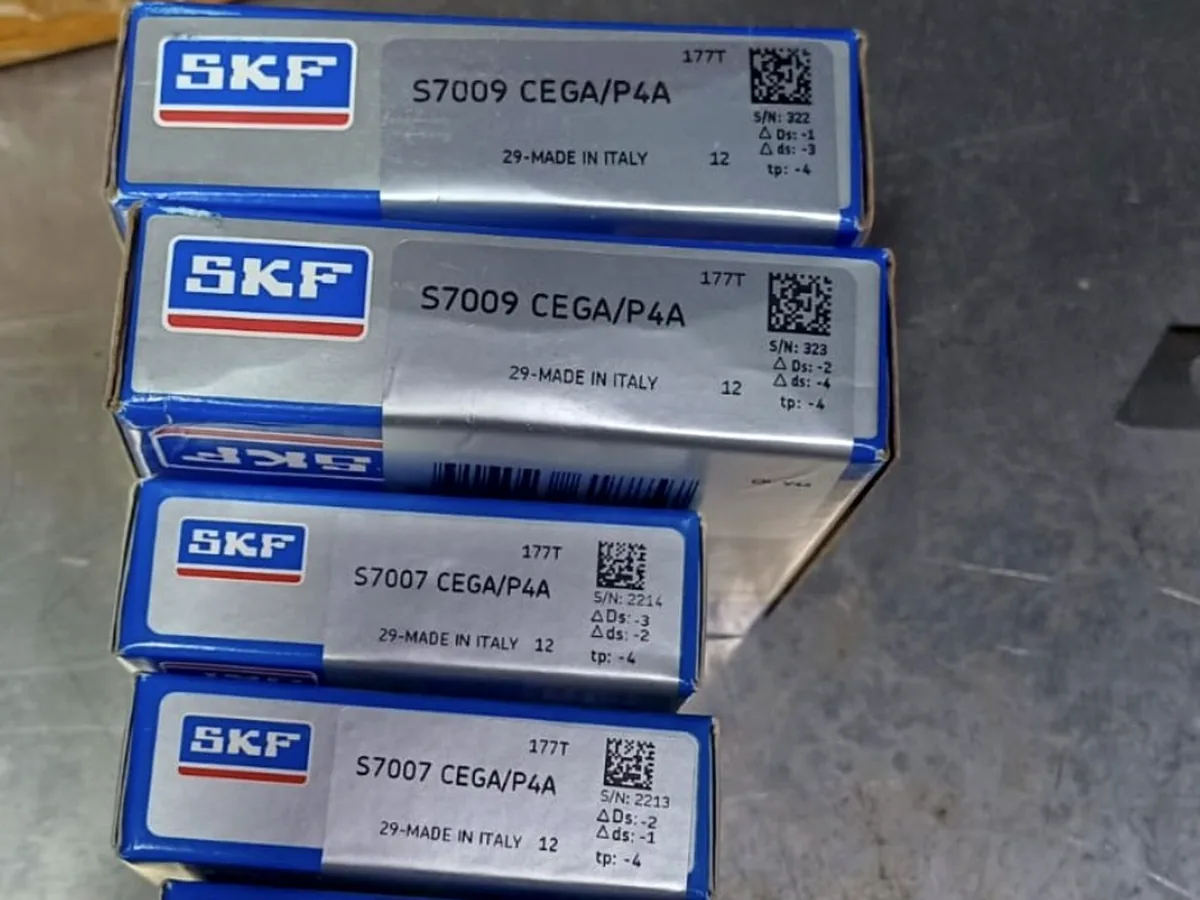
Angular contact bearings are supplied and fitted as matched sets so that load sharing and preload behave as designed. Replacing one bearing out of a set leaves the rest worn and the load distribution wrong.
Preload set for the spindle type
Preload follows the design: spacers ground to size on rigid arrangements, or spring preload where the spindle uses it. It is set for that spindle and its speed range, not to a general figure.
Bearing seats on shaft and housing
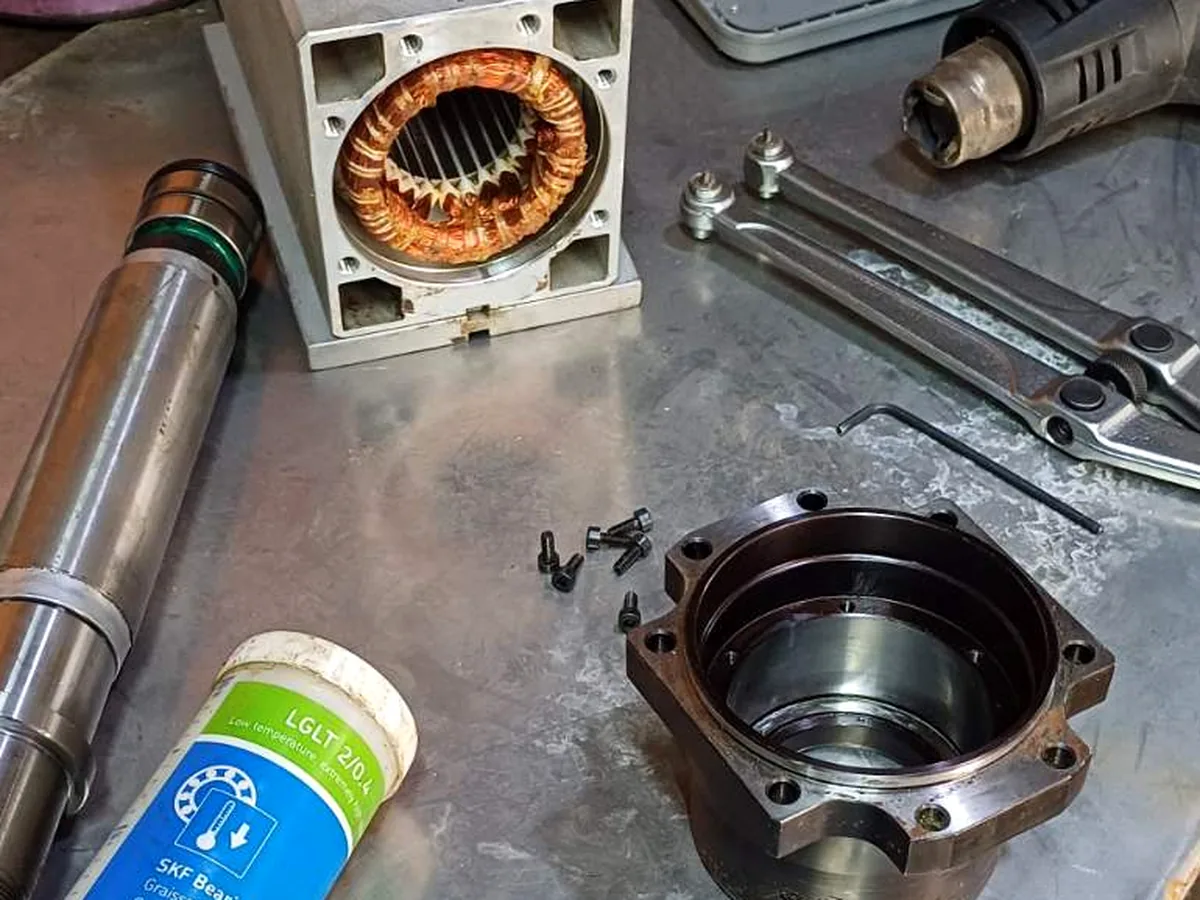
Seats are measured for diameter, roundness and cylindricity. A spun inner ring or a fretted housing bore has to be repaired or the new bearings will work loose again, and we say so before fitting anything.
Grease or oil-air lubrication
Grease-packed bearings are filled to the quantity the design calls for. Oil-air spindles have their nozzles, lines and metering checked and cleared. Overfilling a grease spindle causes much the same overheating as running it dry.
When it is needed
Symptoms that point at the bearings
Noise and rising temperature
A spindle that has become audibly rougher, or that runs hotter at the same speed and load than it used to, is usually reporting bearing wear.
Runout and finish drifting
Chatter marks, a deteriorating surface finish or growing runout at the tool interface often mean lost preload in the bearing set rather than a tooling or programming problem.
Coolant or swarf ingress
Failed seals let coolant and fine swarf into the bearing chamber. Once contamination has reached the raceways the bearings are replaced, because the damage is already in the steel.
Process
The sequence in the workshop
-
1
Strip and record
The spindle is dismantled and the old bearings kept. Their wear pattern says a good deal about why they failed, and that goes into the report with the photographs.
-
2
Measure the seats
Shaft and housing are measured cold. If a seat is outside tolerance, the repair options and their cost are put to you before the rebuild goes any further.
-
3
Fit and set preload
New bearing sets are fitted clean and in the correct orientation, with spacers ground or spring preload set for that arrangement. Lubricant is applied to the specified quantity.
-
4
Run in and measure again
The rebuilt spindle is run in through its speed range while temperature and vibration are recorded, then runout is measured again and the figures go into the test report.
Checklist
Information that speeds up the quotation
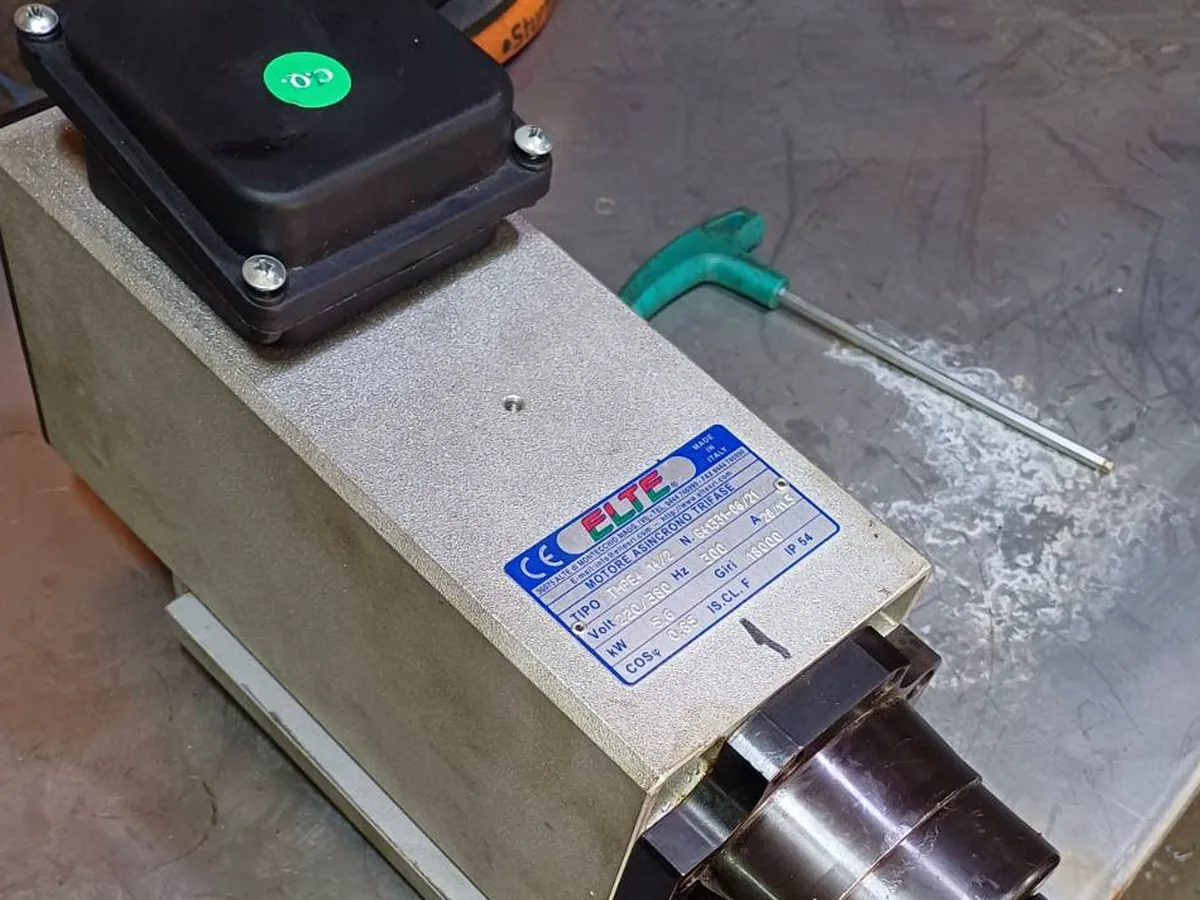
- Spindle type plate and, if known, the bearing arrangement
- Running hours and how the spindle is used
- Lubrication type: grease packing or oil-air system
- Whether the spindle has been opened before
Questions
Bearing replacement spindle repair — frequently asked
No. Once coolant, swarf or emulsion has reached the raceways, the surfaces are pitted or corroded even where they still look acceptable. Cleaning removes the contamination but not the damage, and the spindle would be back before long. Bearings are replaced as a matched set.
That depends on speed, load, lubrication and how much coolant reaches the seals, so no honest figure can be given for a particular machine. What can be said is that correct preload, clean assembly and the right lubricant quantity are typically what decide it.
We are independent and not a dealer for any spindle manufacturer. We fit bearings of the same type, tolerance class and preload category from established bearing makers, and the parts actually used are listed in the report you receive with the spindle.
Typically five to ten working days from arrival, depending on parts availability and what the teardown reveals. That is an estimate, not a committed date; a binding date is only valid if we confirm it in writing after the inspection.
Get the bearings assessed
Send us the spindle type and a description of what the machine is doing. We will tell you where to ship the unit and what the inspection and the quotation will cover.
Scope
Spindle work we carry out for customers in Bearing replacement
Every operation below is done in our own workshop in Germany. Follow a link for what it involves and what we need from you.
Machine brand
Machine brands
We are independent and not tied to any builder. These are the makes whose spindles come across the bench most often.