 English
 Deutsch
 Français
 Español
 Nederlands
 Polski
 Italiano
 Română
 Türkçe
 Português
 Čeština
 Magyar
 Svenska
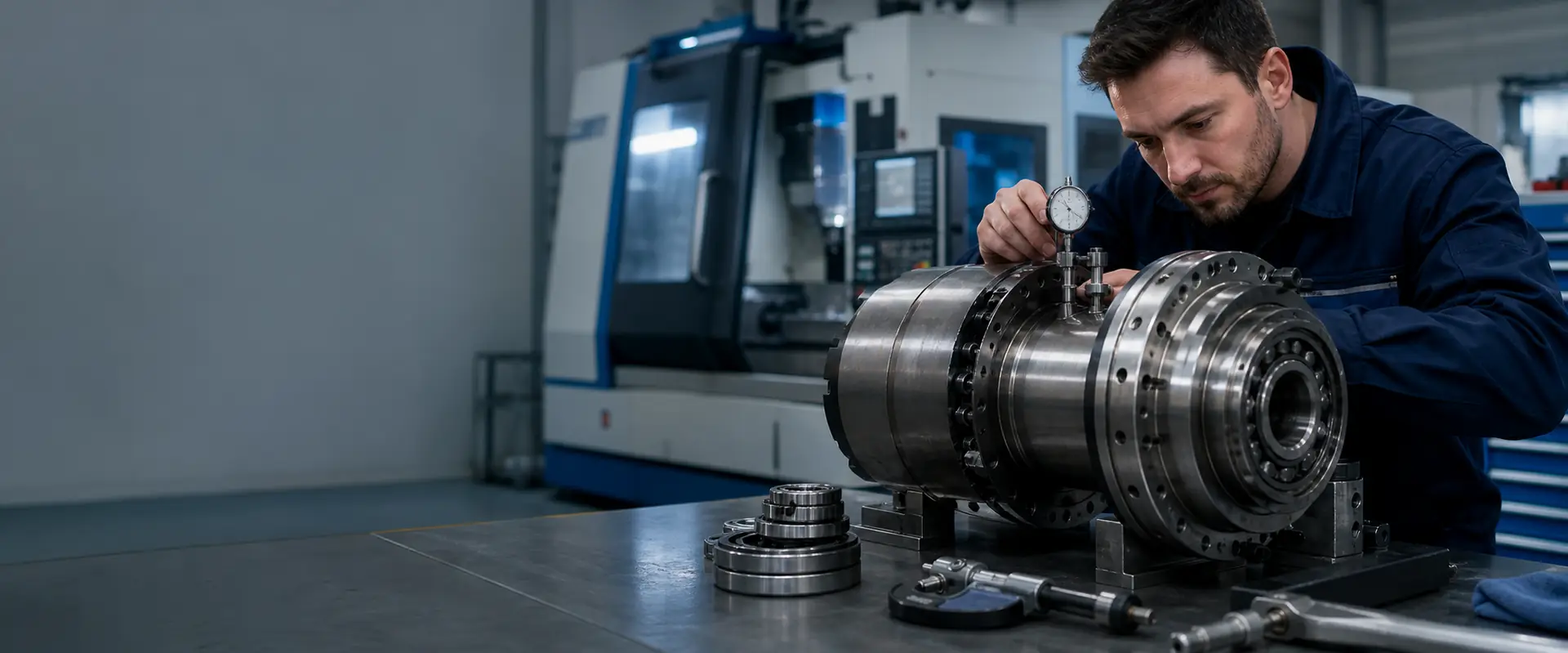
Machine type · CNC routers
CNC Router Spindle Repair
A CNC router runs light tools at high speed, surrounded by dust and chips from wood, MDF, stone, plastics, composites or aluminium. At its heart is an inverter-fed electrospindle. In our workshop in Sankt Augustin, Germany, we repair the spindles of CNC routers, engraving machines, nesting centres and woodworking machining centres: we replace the bearings, restore the collet seat and the automatic tool change, test the winding, then balance the rotor and run the spindle in on the bench.
Machine type
CNC router: light gantry, fast electrospindle
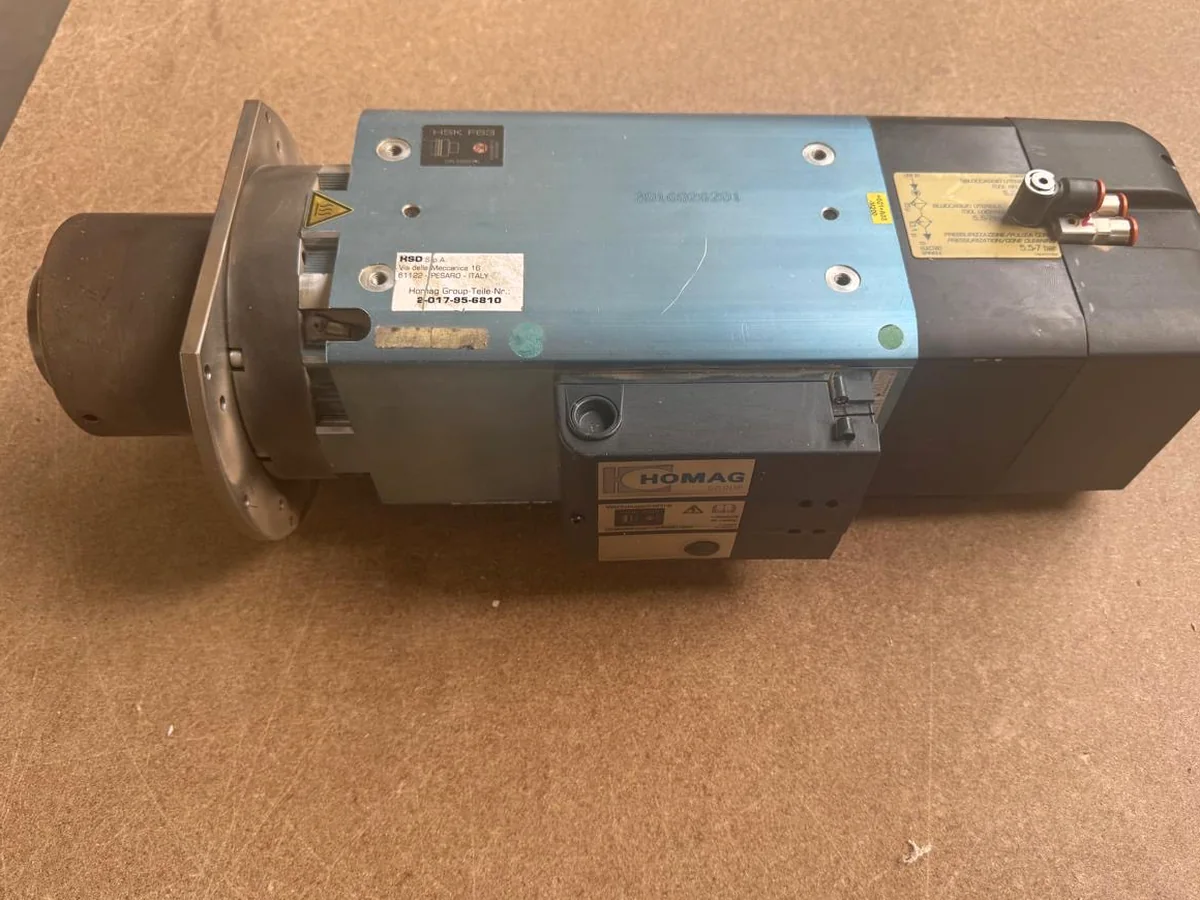
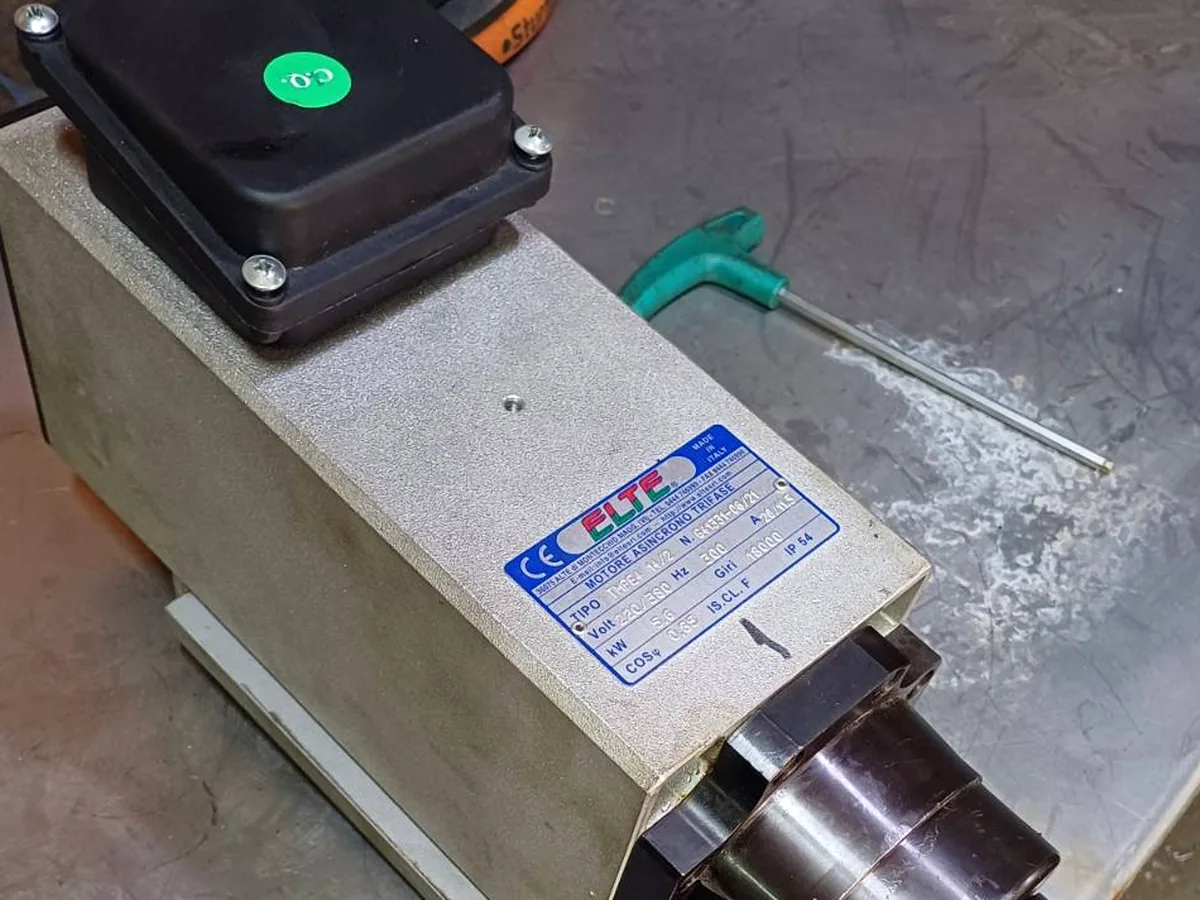
A CNC router usually has a gantry, a vacuum or T-slot table and an electrospindle with a built-in induction motor. The shaft runs on preloaded precision ball bearings, often hybrid, and the motor is fed by a frequency inverter. The tool is held by an ER collet on simpler machines, or by an ISO30 or HSK F63 taper on machines with automatic tool change (ATC).
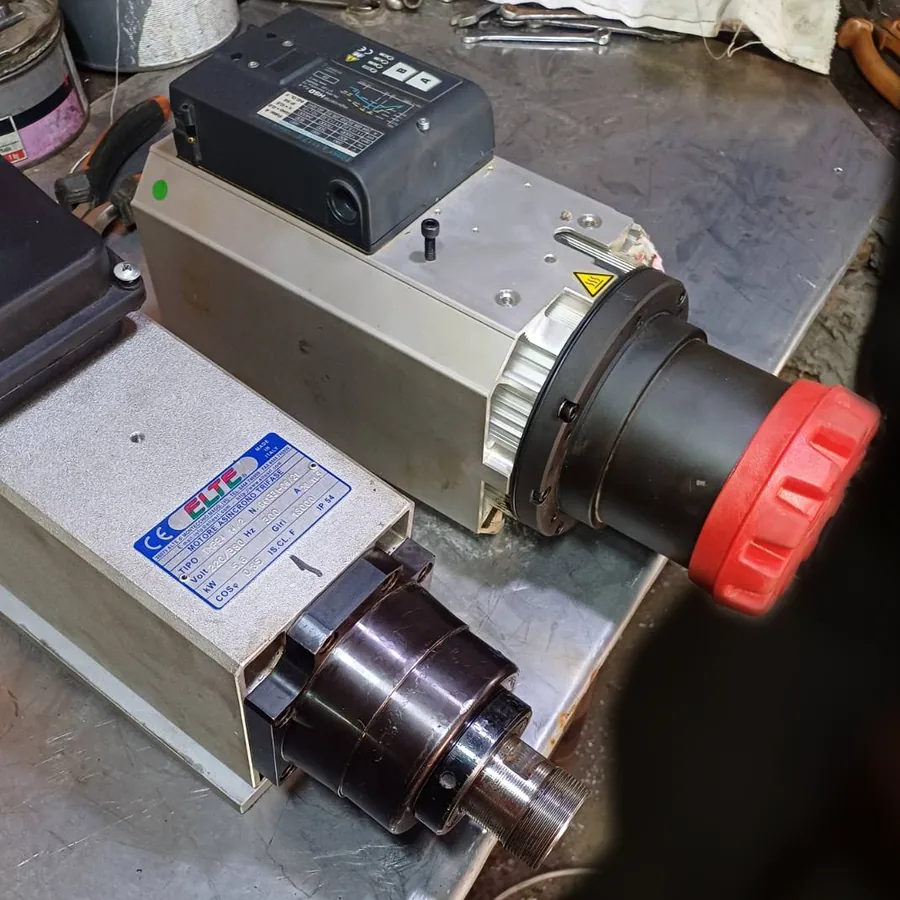
For the repair, the spindle itself is what matters: the data on its plate define the bearings, the clamping set and the run-in programme.
- Spindle plate: maker, type, serial number
- Frequency, voltage, power and maximum speed
- Interface: ER collet, ISO30 or HSK F63
- Cooling: fan or liquid jacket
- Tool change: manual, or ATC with pneumatic cylinder
Designs
How CNC router spindles are built
A router electrospindle combines the motor, the bearing arrangement, the tool interface and the sensors in one housing. The version decides which parts we check first.
ER collet and manual tool change
Nut, collet and the internal taper of the shaft. Besides the bearings, we check the collet taper and the runout at tool overhang.
ISO30 or HSK F63 tool change
Inside: a drawbar with disc springs, a collet or gripper, the pneumatic release cylinder and cone cleaning. We measure clamping force and piston stroke.
Air or liquid cooling
A fan on the rear end or a liquid jacket in the housing. Cooling sets the life of the bearings and of the winding insulation.
Inverter and stator winding
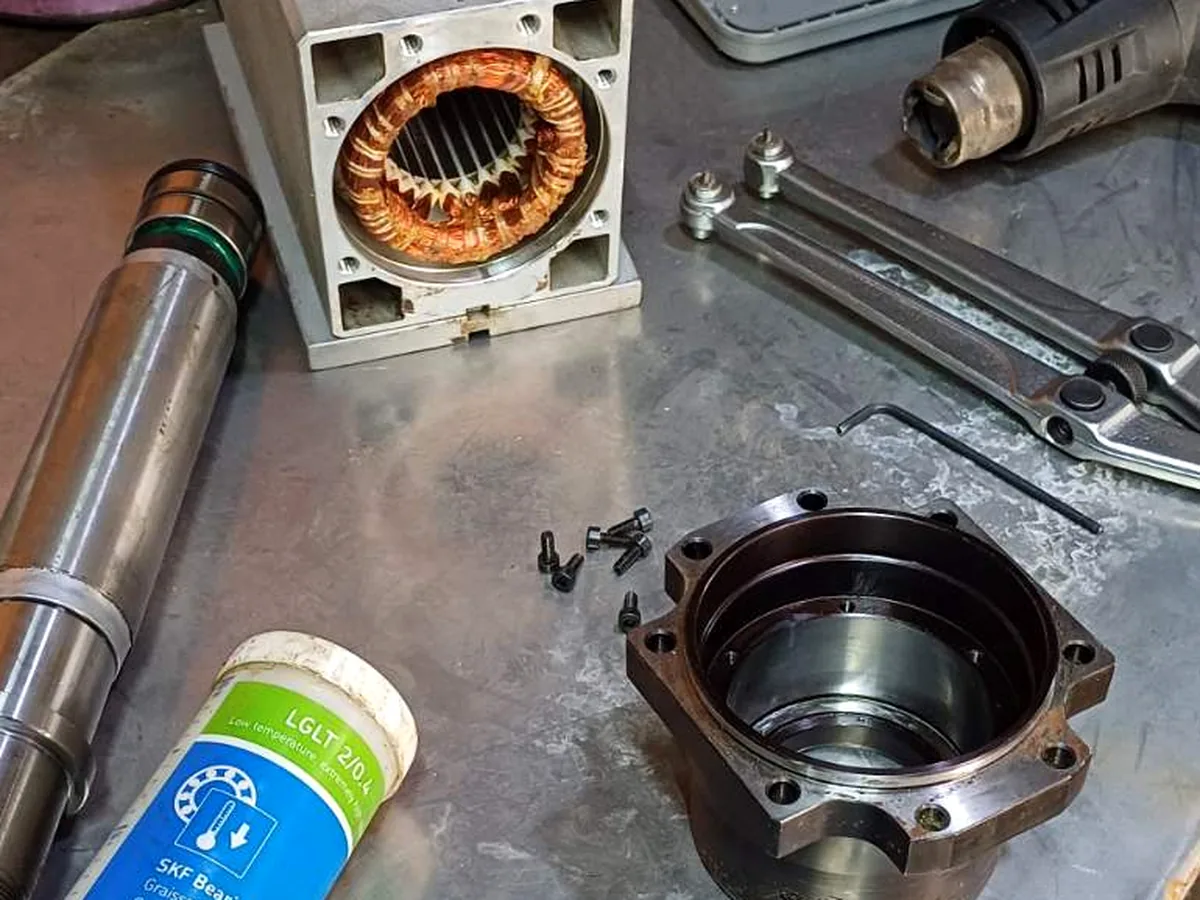
The motor runs on a frequency inverter. We measure resistance and insulation and carry out electrospindle rewinding where needed.
Symptoms
Common faults on CNC router spindles
Most router spindle repairs come down to three things: a tool crash, dust, and running at the limit of the cooling. This is what we see most often.
Bearing noise after a crash or dust
A cutter hitting the workpiece or a clamp, fine dust past the labyrinth seal — and the bearings hum and run hot. We replace them as a set with the correct preload.
Collet and tool runout
A worn collet taper or a distorted nut or collet gives a torn edge and fast cutter wear. We measure runout and restore the taper by regrinding.
ATC will not release the tool
The cause lies in the piston and seals of the release cylinder, tired disc springs or the drawbar collet. We check the whole chain and measure the clamping force.
Sensor faults
Piston position, tool-present and speed sensors stop the program even when the mechanics are sound. We adjust and test them on the bench.
Overheating
A stopped fan, clogged housing fins or a fouled liquid jacket. We clean the passages and check the fan and the temperature sensor.
Inverter trips and moisture
Overcurrent alarms often come from winding insulation weakened by moisture in a cold shop. We dry, measure and, where needed, rewind the stator.
Spindles and machines
Electrospindles most often found on CNC routers
HSD electrospindles are fitted to a large share of woodworking centres and routers, and Elte units are common on routers with ISO30 tool change — each maker has its own page. We also repair Teknomotor, Colombo and Perske spindles and the Asian-built units widespread on CNC routers, including Changsheng and GDZ. Among the machines, Homag, Biesse and SCM centres appear often, alongside routers built in Asia and Turkey.
What we do with a router spindle
- We receive the spindle, record the plate and symptoms, and agree the scope of diagnostics.
- The unit is stripped, cleaned of dust and resin, and the shaft, housing, taper, clamping set and stator are measured.
- You receive a written quotation with inspection photos; work starts once you approve it.
- Bearings, seals and clamping parts are replaced, sourced new from the European market.
- We carry out dynamic balancing of the rotor, adjust the sensors and run the spindle in across its speed range.
- The spindle goes back to you with a test report, ready to fit.
Questions
CNC router spindle repair — frequently asked
Yes. We replace the bearings, check the collet taper, winding and fan, and balance the rotor. If a new unit is the better choice, we offer options from our electrospindles to order range.
Stop running it at high speed and send us a description and photos. Damaged bearings quickly pass the load on to the shaft and bearing seats, so an early repair is usually smaller in scope.
Photos of the spindle plate, the taper or collet, the connections and the machine plate, plus a short description of the symptoms.
Yes, we carry out stator rewinding, followed by electrical tests and a run-in on the bench.
By courier or freight forwarder. Within the EU there is no customs paperwork; for other countries we help with the export and return documents. For removal and refitting we also offer on-site service.
Related
Spindle makers and parts for routers
Tell us about your CNC router
Give us the machine model and the data from the spindle plate and describe the symptoms — we come back with an initial assessment and a written quote before any work begins.
Scope
Our spindle services
Every operation below is done in our own workshop in Germany. Follow a link for what it involves and what we need from you.
Machine brand
Machine brands
We are independent and work with spindles of every builder. These are the makes whose spindles come across the bench most often.